Hemp Seed Oil vs CBD Oil: What’s the Difference and How to Use Each

Jonathan Sullivan
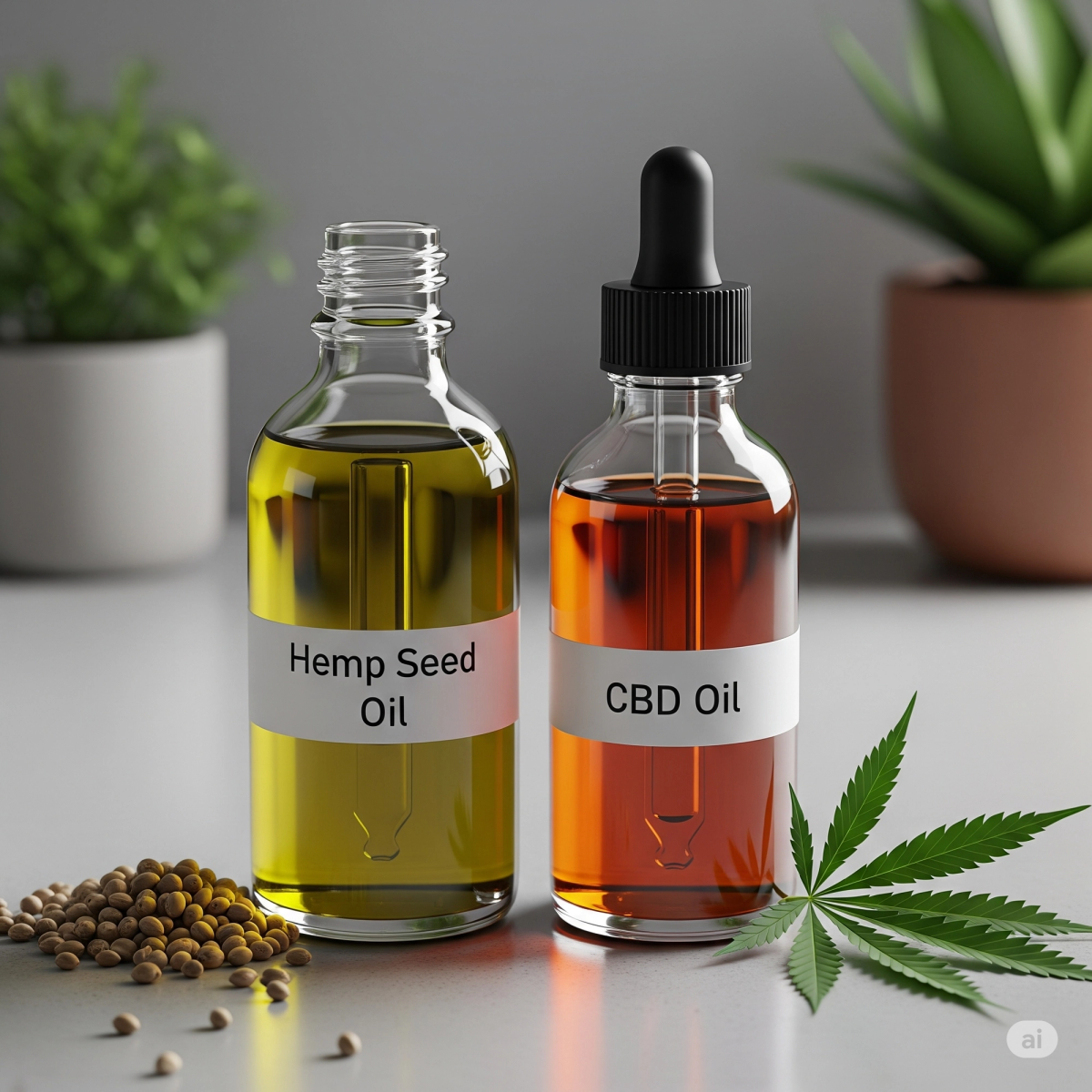
Stroll down the health aisle or browse wellness sites, and you’re bound to encounter hemp oil and CBD oil being touted for various benefits. It’s easy to get confused – aren’t they the same thing? Actually, hemp seed oil and CBD oil are quite different, and using one in place of the other might not give you the results you expect. Fear not, we’re here to clarify the differences in plain English and help you understand the benefits and uses of each oil. By the end, you’ll be the friend who can explain why that cooking hemp oil isn’t going to calm your anxiety (but is great in salad dressing), and why a pricey CBD oil is wasted if you try to fry veggies with it.
Hemp Seed Oil vs. CBD Oil: They’re From Different Parts of the Plant
Let’s start with the basics: Both come from the hemp plant, but from different parts.
- Hemp Seed Oil: This is oil pressed from the seeds of the hemp plant. If you crack open hemp seeds, they’re about 30-35% oil by weight, so we squeeze that oil out similar to how we get olive oil from olives or almond oil from almonds. Importantly, hemp seeds contain virtually no CBD or THC – they’re basically free of cannabinoids. So hemp seed oil does not contain CBD (or any significant amount of cannabinoids)cbdreakiro.com. It’s sometimes just called “hemp oil” on product labels (which adds to confusion).
- CBD Oil: This is generally referring to an extract from the hemp plant’s flowers (and sometimes leaves) that is rich in cannabidiol (CBD). Manufacturers take the cannabinoid-bearing parts of hemp (which have CBD, and legally must have <0.3% THC) and use solvents or CO2 extraction to pull out the cannabinoids, then dilute that extract into a carrier oil (often MCT coconut oil or hemp seed oil, ironically). The end product is a tincture or oil that contains a measurable amount of CBD, usually indicated in milligrams on the bottle. CBD oil may also be labeled as “hemp extract” or “phytocannabinoid-rich hemp oil” – the key is it contains CBD. Good CBD oils will list how many milligrams of CBD per serving. They often also contain other cannabinoids and terpenes if full-spectrum, or just pure CBD if isolate.
In short: hemp seed oil comes from seeds (no CBD), CBD oil comes from the plant material (lots of CBD). If you buy pure, food-grade hemp seed oil, you are not buying a supplement that will have noticeable calming or pain-relief effects – you’re buying a culinary oil. Conversely, CBD oil is sold as a wellness supplement, not something you’d drench your salad with (for multiple reasons, including cost!).
Benefits of Hemp Seed Oil
Hemp seed oil is trending in the natural food world and for good reason – it’s a nutritional powerhouse and a versatile cooking/skincare ingredient. Here are its key benefits:
- Rich in Healthy Fats: Hemp seed oil is famed for its fatty acid profile. It’s loaded with omega-6 and omega-3 fatty acids, roughly a 3:1 ratio of omega-6 to omega-3, which is considered an optimal balance for human health. Specifically, it’s high in linoleic acid (omega-6) and alpha-linolenic acid (omega-3), plus it contains the rarer gamma-linolenic acid (GLA) which has anti-inflammatory properties. These fats support heart health, brain health, and skin health. In fact, adding hemp seed oil to your diet can help improve your cholesterol balance and blood pressure – some small studies and lots of nutritional science back this up, thanks to those omegas. It’s plant-based and cholesterol-free, obviously.
- Vitamins and Antioxidants: Hemp seed oil provides a good dose of Vitamin E, which is a powerful antioxidant beneficial for skin and overall health. Just a tablespoon can contain a significant portion of your daily Vitamin E needs. It also has trace minerals and phytosterols that can contribute to heart health by helping lower LDL cholesterol.
- Skin Moisturizer & Soother: Used topically, hemp seed oil is a star for skin. It’s lightweight and absorbs without feeling greasy. The essential fatty acids help reinforce the skin’s natural barrier, keeping it soft and hydrated. People with dry skin, eczema, or psoriasis sometimes use hemp seed oil or creams containing it to soothe irritation and redness. Because it’s rich in GLA and Vitamin E, it can calm inflammation and promote healing of the skin. You’ll find hemp seed oil in many natural lotions, balms, and even hair conditioners for its moisturizing effect.
- Digestive Aid: Anecdotally, some people take hemp seed oil straight by the spoonful for digestive benefits. The oil can lubricate the digestive tract and the balance of omega fatty acids may foster a healthy gut environment. It’s also used sometimes as a gentle way to relieve constipation.
How to Use Hemp Seed Oil (Internally): The best way is as a food ingredient. It has a nutty, earthy flavor somewhat like a mild walnut or sunflower oil. You can:
- Drizzle it over salads or roasted veggies (think of it as a finisher, like how you’d use flaxseed oil or a finishing olive oil).
- Blend a spoonful into smoothies for a nutrient boost.
- Use it to make salad dressings, mixing with vinegar or lemon (its flavor pairs well with balsamic or apple cider vinegar and herbs).
- Pour it over hummus or dip with bread (with a dash of salt and pepper, yum).
One important note: don’t fry with hemp seed oil. It has a relatively low smoke point (around 330°F/165°C). High heat can make it smoke and also destroy those delicate fatty acids. So use it cold or warm, but not for high-heat cooking.
Topical use: You can apply hemp seed oil directly to skin (some people use it as a facial oil at night or to massage into cuticles). Or look for lotions with hemp seed oil. It absorbs well and doesn’t clog pores – in fact, its composition is similar to skin’s natural lipids, which makes it a great facial oil even for oily or acne-prone skin (it can actually help balance sebum production).
Benefits of CBD Oil
CBD oil is popular for a whole different set of reasons. Remember, CBD (cannabidiol) is a cannabinoid that interacts with the body’s endocannabinoid system, which helps regulate things like mood, pain sensation, and immune responses. While research is still ongoing and CBD is not a miracle cure, people use CBD oil for several potential benefits:
- Stress & Anxiety Reduction: One of the most common uses of CBD oil is to help with anxiety and everyday stress. Users often report feeling more relaxed or less jittery after taking CBD. Scientific studies are starting to back this up, indicating CBD may have anxiolytic (anxiety-reducing) effects. For instance, some small clinical trials found CBD reduced anxiety in people with social anxiety disorder or helped with anxiety related to public speaking. It’s not a sedative per se, but many find it sort of “takes the edge off” without making you loopy.
- Pain and Inflammation Relief: CBD has been investigated for pain relief – from chronic aches to exercise-induced soreness. It has anti-inflammatory properties; in studies on arthritis and muscle pain, CBD applied topically or taken internally showed potential to reduce inflammation and discomfort. People with conditions like arthritis, migraines, or muscle spasms sometimes use CBD oil or cream as a natural alternative. There’s even an FDA-approved CBD-based drug (Epidiolex) for certain kinds of epilepsy, highlighting its anti-inflammatory and neuro-calming effects. While over-the-counter CBD isn’t a cure for pain, many use it as part of their pain management toolkit.
- Improved Sleep: By alleviating anxiety and pain for some, CBD indirectly helps with sleep. Additionally, at higher doses CBD can be somewhat sedating on its own. Folks struggling with insomnia or restless sleep have turned to CBD oil; some report falling asleep faster or sleeping deeper. It may not knock you out like a sleeping pill, but a pre-bedtime CBD dose (especially combined with a relaxing routine) could support better sleep patterns.
- Other Potential Benefits: CBD is being researched for a variety of other roles – from helping with epileptic seizures (as mentioned) to possibly aiding in addiction recovery, and even as a supplement for certain inflammatory conditions like IBS or acne (due to its anti-inflammatory nature). These uses are still being explored in research. Importantly, CBD does not produce a high and has no significant abuse potential, making it an attractive option for those seeking relief without impairment.
How to Use CBD Oil: CBD oil typically comes in a tincture bottle with a dropper. The label will tell you how much CBD is in a dropperful or per drop. Common ways to take it:
- Sublingually: This means you drop the oil under your tongue and hold it there for 60-90 seconds before swallowing. This can help the CBD absorb more directly into your bloodstream through mucous membranes, leading to faster effects (usually within 15-45 minutes).
- In foods/drinks: You can also swallow CBD oil or mix it into a smoothie, tea, or other beverage. This route goes through digestion so it might take a bit longer (30-90 minutes to feel effects). Some people don’t love the natural taste of CBD oil (often described as grassy or earthy), so mixing with food or a flavored beverage can help.
- Topically: Some CBD oils (if in a skin-friendly carrier like hemp seed or coconut oil) can be rubbed onto the skin over a localized area that’s sore (say, on a knee or neck). However, often dedicated CBD creams are better for this since they include other beneficial ingredients.
Dosage of CBD oil can vary widely. A beginner might start with a small dose, like 10-15 mg of CBD, to see how they feel. Others might find they need 25-50 mg or more for desired effects. It’s very individual – factors like body weight, metabolism, and the condition you’re addressing matter. A good rule is start low and go slow: begin with a modest dose and increase gradually over a week or two if needed. (Always follow any brand-specific instructions, and consult a healthcare provider if on medications, as CBD can interact with certain drugs).
Choosing Quality and Being Aware
Whether you’re buying hemp seed oil or CBD oil, quality matters:
- Hemp Seed Oil: Look for cold-pressed, unrefined oil (it will be greenish in color and labeled as virgin or cold-pressed). This retains the most nutrients. Ideally, choose one packaged in a dark bottle (to protect from light) and check that it smells and tastes fresh (a bit nutty or grassy, not fishy or rancid – polyunsaturated oils can go bad if old or stored improperly).
- CBD Oil: Because the CBD market is flooded with products, do a bit of homework. Reputable CBD oils will have 3rd-party lab test results available to confirm they contain what they claim (CBD content) and are free of contaminants (like pesticides, heavy metals, and that the THC is under 0.3%). Check the label for CBD quantity (e.g., “500mg CBD per 30ml bottle”). Also consider spectrum: Full-spectrum CBD oil contains other cannabinoids and a tiny legal amount of THC (which can enhance effectiveness through the entourage effect, but won’t get you high), Broad-spectrum has other hemp compounds but 0% THC, and CBD isolate is pure CBD only. If you want absolutely no THC, go broad or isolate. If you don’t mind trace THC and want maximum hemp goodness, full-spectrum is the way to go.
A common pitfall: some brands label products confusingly as “hemp oil” with a big milligram number, but if you read closely it might be hemp seed oil with no CBD, riding the coattails of CBD’s popularity. Always check if the product explicitly mentions CBD or cannabidiol in the ingredients or supplement facts – if not, assume it’s just hemp seed oil. The price is also a giveaway: hemp seed oil is relatively cheap (like $10-20 a bottle as a cooking oil), whereas CBD oils are more expensive (often $30 and way up, depending on concentration).
When to Use Which
To wrap it up, here’s a quick-reference:
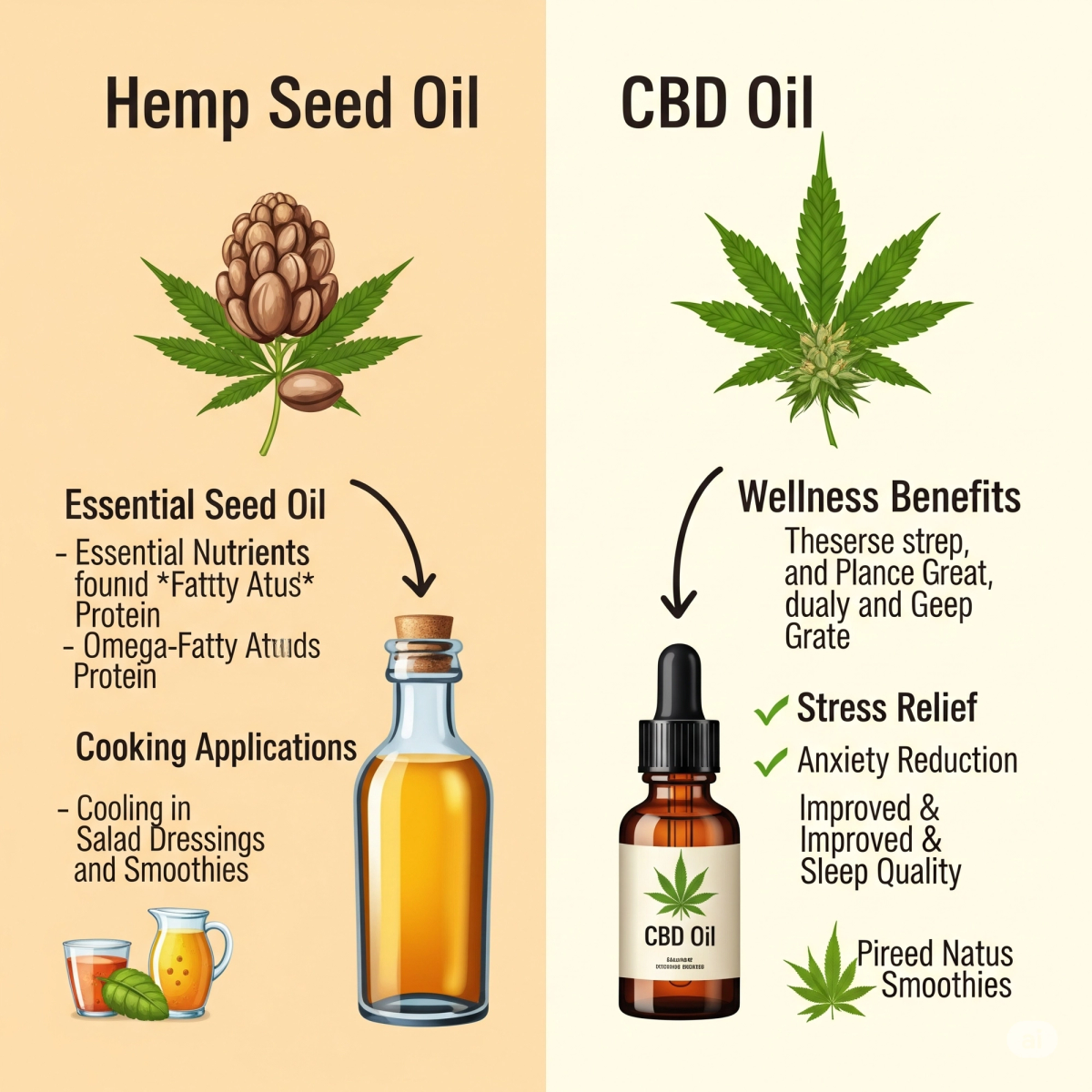
- Use Hemp Seed Oil if: you want a nutritious food supplement or cooking oil for essential fatty acids, or a natural skin moisturizer. Think of it as a superfood ingredient akin to flax oil or a skincare oil.
- Use CBD Oil if: you’re looking for potential relief from stress, anxious feelings, trouble sleeping, or minor pain/inflammation, and you want to support overall balance in the body. This is a wellness supplement, more analogous to an herbal tincture or remedy.
They’re complementary too – some people take CBD oil and also use hemp seed oil in their salad. They’re not in competition, they just serve different purposes.
In summary, hemp seed oil is a nutritious oil with culinary and cosmetic uses, but contains no CBD, and CBD oil is a hemp-derived extract used for its therapeutic potential, not nutrition. Both come from the same wonderful plant, but they end up playing very different roles in your health routine. Understanding that difference will help you purchase the right product and use it effectively. So next time a friend is perplexed at the plethora of “hemp oils” out there, you can confidently explain which is which – and maybe even share a taste of your delicious hemp-infused salad along with some CBD knowledge on the side.