CBD and Drug Testing: Will Hemp Products Make You Fail a Test?

Jonathan Sullivan
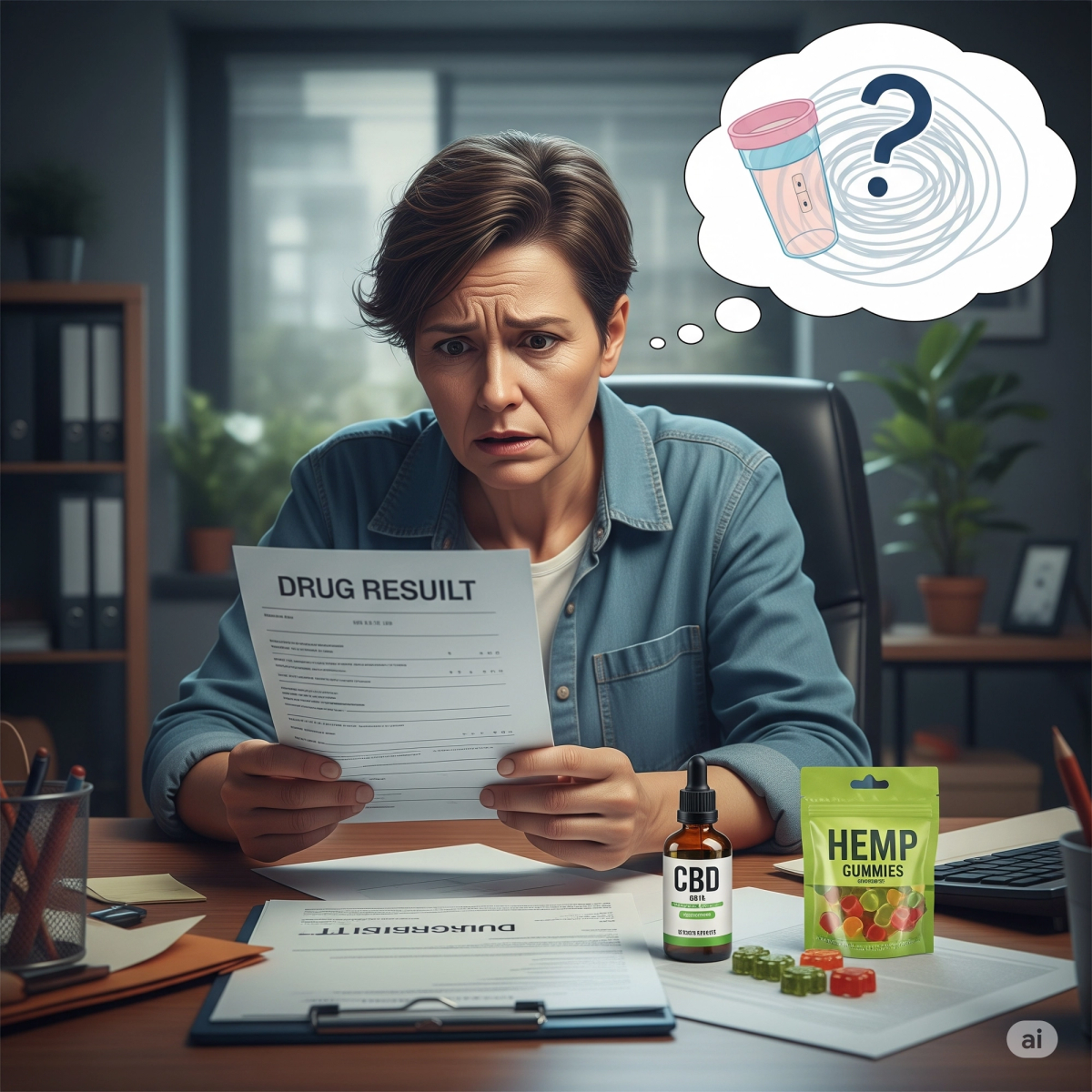
You’ve been enjoying the calm that CBD oil provides or maybe munching on hemp gummies for stress relief. Life is good – until you remember you have a drug test coming up for a new job or a routine screening at work. Cue the panic: “Can CBD or hemp products make me fail a drug test?” It’s a completely valid concern. Drug tests don’t typically screen for CBD, but there’s more to the story. Let’s break down how drug tests work, what they look for, and how using legal hemp products might throw a wrench in the results (and how to minimize that risk).
What Do Drug Tests Look For?
Standard drug tests (like the common urine test used by employers, often a SAMHSA-5 panel) are not looking for CBD at all. They target THC – specifically a metabolite of THC called THC-COOH. This is a compound your body produces after breaking down THC, and it’s what gets stored in fat and can linger for days or weeks.
So, if all you’ve been consuming is pure CBD (with absolutely zero THC), in theory you should pass a THC drug test with flying colors. CBD itself will not cause a positive for THC. Great, right?
The issue is, many CBD or hemp products have trace amounts of THC. Remember, federally legal hemp can contain up to 0.3% THC by dry weight. Full-spectrum CBD oils intentionally include all cannabinoids, including a tiny bit of THC (to leverage the “entourage effect”). Even some “THC-free” broad-spectrum products have been found to contain very low THC in lab testsverywellhealth.com. Over time, those small doses can add up in your system.
There’s also the problem of mislabeling. Shockingly, studies have found a lot of inconsistency in the CBD market:
- A 2017 study published in JAMA tested 84 CBD products and found 21% of them contained THC even if not labeledhopkinsmedicine.org. Some had enough THC that if someone took them, they could potentially test positivehopkinsmedicine.org.
- Another analysis found that even products labeled “THC-free” sometimes had traces of THCpmc.ncbi.nlm.nih.gov.
In one extreme case, a woman who took a CBD oil for anxiety (from a brand she didn’t realize had poor testing) ended up testing positive and it turned out the product had more THC than advertised. These stories underscore that quality control matters.
Can CBD Turn Into THC in the Body?
This was a myth that circulated – the idea that CBD could somehow metabolize into THC internally. Standard biochemistry says no, CBD doesn’t convert to THC in your body. The false notion came from some lab experiments in artificial stomach acid that aren’t reflective of real human biology. So, the primary risk isn’t CBD transforming, it’s THC contamination or presence in the product itself.
Risk Levels of Different Hemp Products
Let’s grade some common products by risk:
- CBD Isolate (pure CBD crystals or truly THC-free oils made from isolate): Lowest risk. No THC means it shouldn’t trigger a test. However, ensure the product is from a trusted source that provides lab results confirming 0.0% THC.
- Broad-Spectrum CBD: These should have THC removed, while keeping other cannabinoids. Low risk, but there’s a small caution that some broad-spectrum products might have a trace if manufacturing wasn’t perfect. Check labs – you want “ND” (none detected) for THC on the report.
- Full-Spectrum CBD Oils/Tinctures: These do have up to 0.3% THC legally. Moderate risk. If you take a moderate dose daily, say 50 mg CBD that has maybe 0.15 mg of THC per 10 mg CBD (just as an example ratio), you’re ingesting a few milligrams of THC a week. That could show up on a urine test especially with continuous use. Some folks have used full-spectrum and still passed tests (especially at low doses), but others have not been so lucky. It’s a bit of Russian roulette depending on dose, your metabolism, and testing sensitivity.
- Hemp Foods (seeds, protein powder, hemp oil): Very low risk. Hemp seeds naturally have negligible THC (most THC in the plant is in the resinous parts, not the seeds). There was a concern back in the early 2000s where some people in the military tested positive supposedly from eating a lot of hemp oil or seeds, leading to a short-term ban on hemp foods in the U.S. military. However, modern processing cleans seeds well. As long as you’re eating reasonable amounts, hemp seed-derived foods shouldn’t give a positive. The THC, if any, is in the parts per million range. To be ultra-safe, some guidelines suggest avoiding hemp foods in the days before a test, but the risk is minimal.
- Topical CBD (creams, balms): Low risk. Even if a topical has some THC, if it’s truly topical (not a transdermal patch designed to go into bloodstream), it mostly stays local and won’t likely reach urine. However, I wouldn’t use a THC-heavy patch or something and assume it’s fine – transdermals can get into blood. Standard cosmetics are fine.
- Vape cartridges or Hemp flower smokables: If these are full-spectrum, same issue as oils – moderate risk due to THC. The quick absorption doesn’t change how a urine test sees it; THC is THC. On the plus side, if you only smoked hemp flower once in a blue moon, it likely clears faster than regular high-THC cannabis because of lower total intake.
Drug Test Sensitivity and Cut-offs
Most workplace urine tests have a cut-off of 50 ng/mL for THC-COOH. That means if you have less than that in your urine, it reports negative (even though technically there might be a tiny amount). This cut-off helps avoid false positives from incidental exposure.
If you’re taking a little THC via hemp, you might hover near that threshold. For example, one study had people ingest a hemp oil with 0.27% THC daily; a couple of them did test positive around the 50 ng/mL levelhopkinsmedicine.org. It’s not guaranteed you will fail, but it’s possible. Factors:
- How much THC you’re actually getting (which depends on how much product you take and how much THC is in it).
- Your metabolism and body fat (THC stores in fat; if you’re lean and active, you may clear it quicker. If you have higher body fat or slower metabolism, THC builds up more).
- Frequency: If you take CBD oil with trace THC daily, you accumulate more than if you took a one-time dose.
For a one-time use of hemp CBD, it’s pretty unlikely to test positive. Chronic use raises the odds.
Real World Cases and Studies
- A 2019 controlled trial by Johns Hopkins gave people a vaporized CBD-rich cannabis (with 0.39% THC, slightly above hemp level) and found 2 out of 6 participants tested positive at the 50 ng/mL cutoff after just one usehopkinsmedicine.org. The others were below that threshold. With repeated use, the chance would go up.
- Another research paper noted that after people took a CBD product, some tested positive, and it emphasized the need for better labeling and consumer awarenesshopkinsmedicine.org.
- Many anecdotal reports on forums: some say “I used full-spectrum CBD daily and passed a test,” others say “I popped positive and I swear I only used CBD.” It clearly can happen.
One scientific comment from a University of Pennsylvania study stated 21% of CBD/hemp products sold online contained THC even when not labeledhopkinsmedicine.org, meaning unsuspecting users could ingest enough to fail a test.
How to Avoid a Positive Test When Using Hemp Products
If drug testing is a concern for you:
Opt for THC-free products: Use CBD isolate or broad-spectrum from a reputable brand that provides lab reports. Look for lab results showing “ND” or “<LOQ” for THC (not detected). Trust but verify – check that the lab is independent and that the test is recent and for the exact batch if possible.
Avoid high doses of full-spectrum: If you insist on full-spectrum (maybe you feel it works better for you), try to limit your dose and frequency. Maybe use it sparingly rather than daily. But honestly, if a test is imminent, you might want to pause full-spectrum usage entirely in the weeks leading up to it.
Time it out: THC from occasional use usually clears urine in a few days to a week. Chronic use can take a few weeks to clear out. If you know a test is coming (say for a new job), stop all hemp products for as long as possible before the test. Hydrate well (though don’t overdo it to dilute the sample unnaturally).
Be upfront (if appropriate): In some job contexts, you could mention to the tester or HR that you use legal CBD for health, just so it’s on record. However, many employers might not differentiate and a positive is a positive in their eyes. So this is tricky and depends on the company culture.
Use at-home test kits: If you want peace of mind, you can buy a THC urine test kit at a pharmacy and check yourself. If you’re negative at home a few days after stopping use, you’ll likely be fine at the official test (though lab tests might be more sensitive, it’s a good gauge).
Watch out for novel products: Delta-8 THC, THC-O, HHC – these are all hemp-derived but definitely will show up as THC on tests (delta-8 metabolizes similarly to delta-9). Avoid these if you’re tested, even though they’re “legal hemp” in some states. They will trigger positives like regular weed.
Final Thoughts
Using CBD won’t make you fail a drug test, but using CBD products that contain THC might. It’s an unintended consequence for people trying to do the right thing and use legal remedies. The safest route if your livelihood depends on testing is to eliminate as much THC exposure as possible:
- Stick to lab-tested THC-free CBD.
- Steer clear of sneaky THC spinoffs (Delta-8, etc.).
- Moderate your use and give your body time to clear anything before a known test.
The good news is many people successfully use hemp products and keep their jobs. A bit of diligence and smart product choice goes a long way. And the industry is improving – brands know consumers worry about this, so the reputable ones pride themselves on producing 0% THC options.
One day, perhaps workplace tests will evolve to not punish someone for a tiny trace of THC from a legal hemp supplement. But until then, stay informed and cautious. You can have your CBD and your clean drug test, too – just be strategic about it. In the meantime, consider this another reason to push for more comprehensive cannabis laws and better workplace policies that differentiate between use of intoxicating drugs and non-intoxicating wellness products.