CBD Dosage 101: How to Find the Right Amount for You

Jonathan Sullivan
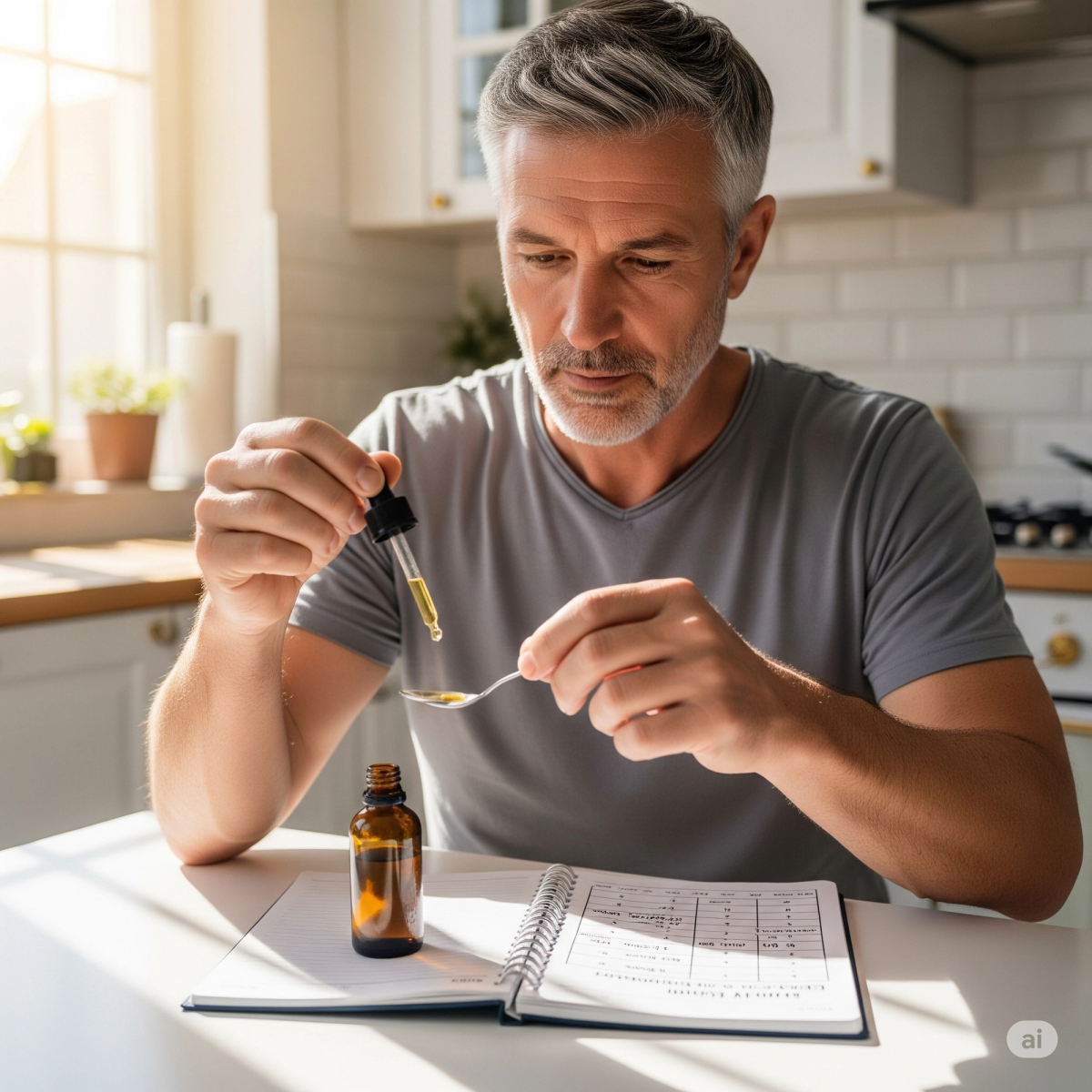
So you’ve got a bottle of CBD oil (or gummies, or capsules) and you’re ready to see if it helps with your anxiety, sleep, or aches. But one big question looms: “How much CBD should I take?” Don’t worry, you’re not alone—figuring out the right dosage is one of the most common sources of confusion for CBD newcomers. This CBD Dosage 101 guide will break it down in simple terms. We’ll cover factors affecting dosage, general guidelines, and tips to find your perfect dose for the benefits you seek. Remember, CBD isn’t one-size-fits-all; a little patience and experimentation will go a long way.
Start Low and Go Slow
The golden rule with CBD (and many supplements) is to start with a low dose and gradually increase until you find what works. Why? Because people respond differently to CBD based on things like body weight, metabolism, the issue you’re addressing, and individual body chemistry.
A low starting dose might be considered 10-15 mg of CBD per day. For many, this is one dropper of a typical strength CBD oil (check your bottle to see how many mg are in a dropperful). If you’re extra cautious, you could even start at 5 mg. It’s always easier to increase later than to take too much at first and feel wasteful or experience mild side effects (the most common of which might be drowsiness or dry mouth in higher doses).
Once you start low, stay at that dose for a few days and observe how you feel. If you’re not noticing any effect, or it’s too subtle, increase slightly. For example, go from 10 mg to 20 mg daily. Then hold that new dose for a few days. Still not there? Titrate up again. This stepwise approach ensures you don’t overshoot the “sweet spot” dosage.
Many people find their sweet spot around 20-40 mg per day, but it can be quite higher for others especially dealing with significant pain or severe anxiety (some may need 50-100 mg/day or more, though high doses can get expensive). According to one guide, a good starting point for most people is 25 mg CBD per day, and then adjust as needed. That aligns with real-world experience where 25 mg is a commonly used dose for general wellness or moderate symptoms.
Consider Your Body Weight and Chemistry
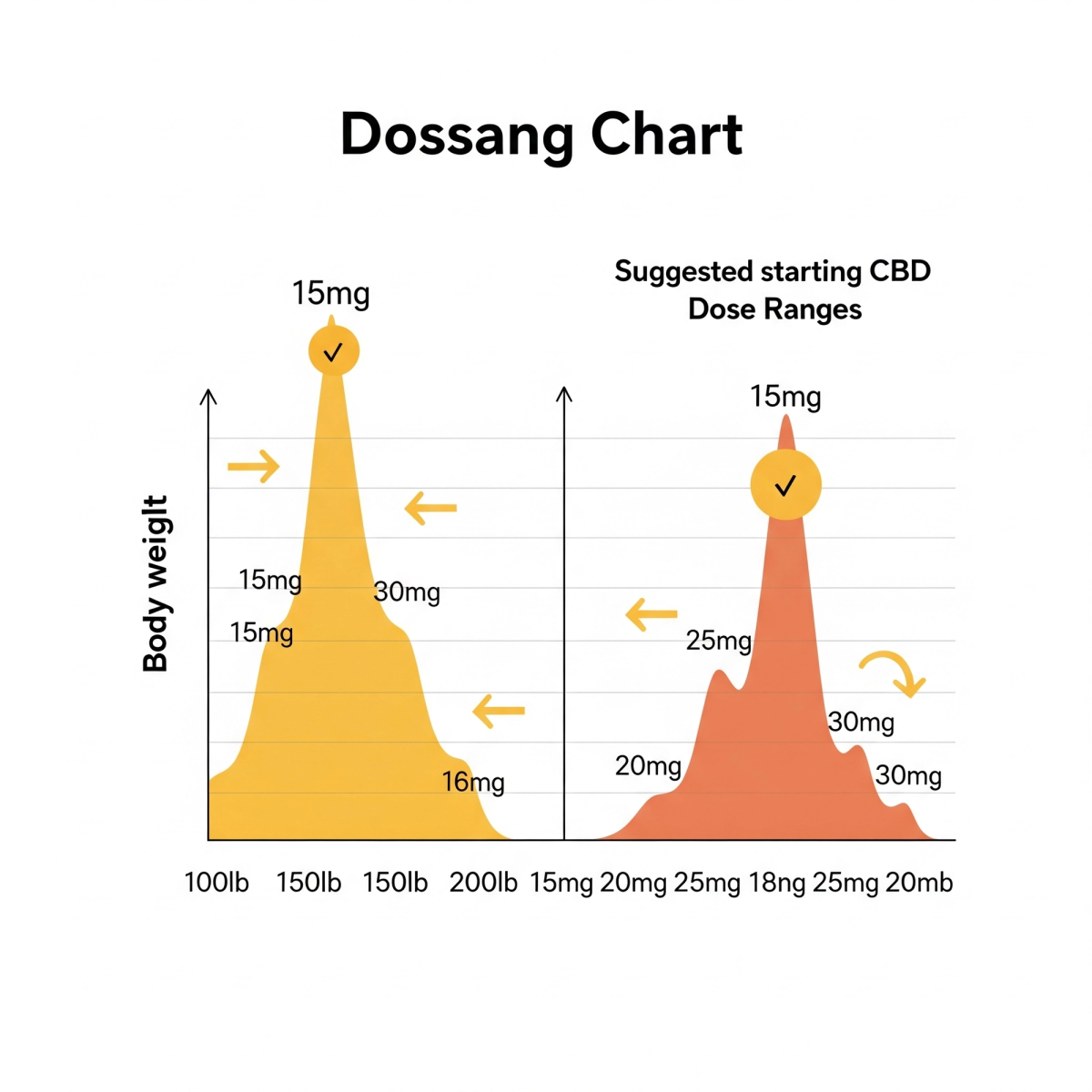
Body weight can influence dosage. A common heuristic some experts suggest: 1-6 mg of CBD per 10 pounds of body weight. That’s a wide range, but here’s how you might use it:
- If you weigh 150 lbs: 15 mg (on the lighter end) up to 90 mg (on the heavier end) might be a therapeutic range to explore.
- If you weigh 100 lbs: perhaps start around 10-15 mg, and upper range might be 60 mg.
- If you weigh 200 lbs: a range might be 20 mg to 120 mg.
Again, these are broad ranges. Metabolism and individual sensitivity matter too. Some people are just more sensitive to CBD. You might find that even if you weigh more, a small dose works, or vice versa.
Other factors: Your internal endocannabinoid system tone can affect how you respond. Some folks naturally have lower endocannabinoid levels and might feel CBD’s effects strongly; others have a high tone and need more. Also, what you’re trying to address matters: for mild situational anxiety, 15 mg might suffice; for chronic pain, you might require more.
General Dosage Guidelines (By Condition & Form)
While research is still emerging, here are some ballpark dosages often discussed for different goals:
- General wellness/stress relief: 10-20 mg per day might be enough to promote an overall sense of balance or to take the edge off daily stress.
- Anxiety: Studies and user reports often find relief around 20-40 mg. For instance, in some social anxiety studies, a single dose of around 300 mg was used acutely, but that’s in a lab setting. Most regular users don’t take that much at once. Many find ~25 mg for anxiety, possibly twice a day, helps maintain calm. Important: severe anxiety disorders may require higher doses or may not respond to CBD alone, so keep expectations realistic.
- Sleep: Doses can vary. Some only need 15 mg before bed to improve sleep, others need 50 mg. A study in 2019 gave subjects 25 mg in the evening and saw improved sleep in many. If sleep is your target, consider a single dose 1 hour before bedtime, starting ~20 mg and adjust up every few nights until you find you’re sleeping through.
- Pain/Inflammation: Chronic pain often requires consistent dosing. Some find relief at 30 mg/day, others require 60 mg or more, split between morning and evening. For example, one might take 25 mg in the morning and 25 mg in late afternoon for all-day arthritis relief. Topical CBD can complement internal dosing for localized pain (with topicals, you don’t worry about mg as much – apply liberally).
- Epilepsy and other severe conditions: These typically use very high doses of CBD (100s of mg) under medical supervision (like Epidiolex for seizures uses ~5 mg CBD per kg of body weight or more). This is not something to attempt without a doctor, but it tells you CBD can be taken at high doses if needed.
Different product forms also affect dosing:
- CBD Oil/Tincture (sublingual): This is the most flexible. Check the label for how many mg of CBD are in a dropper (usually 1ml). For example, a 30ml bottle with 600mg CBD has 20mg per dropper. So half a dropper = ~10mg. With tinctures, you can easily measure out your target dose.
- CBD Capsules/Softgels: These come in pre-measured doses (5mg, 10mg, 25mg, etc.). Start with one capsule of a low dose and escalate by taking more capsules or switching to a higher strength if needed.
- CBD Gummies: Similarly pre-dosed, commonly 10-25mg each. Easy to start with one gummy and increase to two or three if needed (just be mindful of added sugar).
- Vapes/Smoking: Effects hit faster but dosing is tricky to quantify. A puff delivers a certain mg depending on concentration and your inhalation. This route is more for quick, short-term relief and titration by feeling. For example, someone might take 2-3 puffs of a vape when anxiety spikes. Because of lung health concerns, many prefer tinctures or edibles for regular dosing.
- Topicals: Dosing in mg is less clear because absorption varies. Generally, use topicals generously on the affected area. They’re great to pair with an ingestible dose for issues like muscle pain.
Tuning Your Dose: Tips and Expectations
Give it time: CBD often has a subtle effect that builds over days. Don’t be discouraged if you don’t feel much on day 1 or 2. Some people notice immediate changes (especially if they had an acute issue like feeling anxious and then felt calmer), but others find it takes a week of consistent dosing to really see a difference. Stick with a routine for at least a week before making judgments.
Listen to your body: Keep a journal if it helps. Jot down your dose and any effects each day. Maybe you slept 7 hours instead of 6, or you realized you didn’t reach for that 3pm ibuprofen for the first time in months. These clues will tell you if CBD is working and at what dose.
When to increase the dose: If after 5-7 days on a steady dose you feel no positive effect, it’s time to bump it up. Increase in small increments. For example, you started at 10mg daily – go to 20mg. From 20mg, go to 30mg, etc. Once you start feeling the desired effects, you’ve found a good dose. You don’t necessarily need to push higher unless you’re seeking even greater relief and feel there’s room for improvement.
When to split the dose: Some find splitting into 2-3 doses per day is more effective (especially for issues like anxiety or chronic pain that persist through the day). CBD’s effects typically last 4-8 hours depending on form and individual. So you might do morning and evening, or morning, afternoon, and night for more even support. Example: 30mg per day could be 10mg morning, 10mg afternoon, 10mg night.
Be aware of the form’s timing: Edibles (gummies, capsules) take longer to kick in (30-90 minutes) but may last a bit longer. Oils under the tongue absorb faster (15-30 minutes to feel effects). Vaping is nearly instant (minutes) but shorter-lived (2-3 hours). Use this to your advantage. If you need quick relief for a speaking presentation, a tincture or vape might be best. For all-day baseline, capsules morning and night might be easier.
Don’t be afraid of higher doses if needed, but note diminishing returns: CBD is generally well-tolerated even up to hundreds of mg. It’s non-intoxicating and non-addictive. However, more isn’t always better. Sometimes once you hit your effective dose, taking double that won’t double the benefit; it might just waste product or cause diminishing benefits. Plus, very high doses can sometimes cause sleepiness or diarrhea in some (usually above 100-200mg/day). Find the lowest dose that gives you the outcome you want – that’s your ideal.
Consistency is key: Especially for issues like chronic pain, inflammation, or daily anxiety, taking CBD regularly (like a supplement) works better than taking it only when symptoms spike. Think of it as helping maintain balance in your endocannabinoid system so those spikes are fewer and milder.
Consult a professional for special cases: If you’re on medications, particularly those with a grapefruit warning (CBD can interact similarly by affecting metabolism enzymes), check with a doctor. Also if you have a serious condition, getting medical guidance on dosing is wise. They might have seen cases and can suggest tried-and-true doses or even monitor blood levels if on high dose for epilepsy, etc.
Quick Dosage Tips Recap
- Start with a low dose (10-15 mg) and gradually increase by 5-10 mg at a time, every few days.
- Consider body weight: roughly 1-6 mg CBD per 10 pounds body weight is a general range to explore.
- Typical effective doses for many people fall in the 20-40 mg per day range, but your mileage may vary.
- Split dosing into 2-3 times per day if needed to maintain steady effects.
- Adjust for condition: higher end of range for severe pain or insomnia, lower/mid for mild stress or daily wellness.
- Watch for signs it’s working: better sleep, feeling more calm, less pain intensity. These can be subtle, so take note.
- Stay consistent: daily dosing at your chosen times for at least a week or two to gauge true benefits.
- When in doubt, consult with a knowledgeable healthcare provider, especially if you take other medications.
CBD dosage can feel a bit of an art, but with these guidelines, you have a science-backed starting canvas to paint your own experience. By tuning into how you feel and adjusting slowly, you’ll zero in on the amount that gives you the relief or balance you’re looking for. And remember, “low and slow” isn’t just safe – it can save you money by preventing taking more than you need. Here’s to finding your CBD sweet spot!