Hemp Dosage & Legality in 2025: What You Need to Know Before You Buy

Jonathan Sullivan
Hemp Dosage & Legality in 2025: What You Need to Know Before You Buy
If you’ve been exploring hemp-based wellness products, you’ve probably asked two common questions:
👉 How much should I take?
👉 Is it legal where I live?
In 2025, the hemp industry is more regulated — and transparent — than ever. From dosage charts to THC limits, knowing the rules ensures you get the benefits safely and legally.
This guide will walk you through hemp dosage basics, the latest legal updates, and how to choose compliant, high-quality products.
What the Law Says About Hemp in 2025
Let’s start with the big question: is hemp legal?
✅ Short Answer: Yes — Federally
Thanks to the 2018 Farm Bill, hemp and hemp-derived products remain federally legal as long as they contain less than 0.3% THC by dry weight.
But state laws vary.
⚖️ State-by-State Variations
- Progressive States (e.g., Colorado, Oregon, California): Full access to hemp food, wellness, and pet products.
- Moderate States (e.g., Texas, Florida): Legal, but with labeling and lab-testing requirements.
- Restricted States (e.g., Idaho, South Dakota): Products must contain zero detectable THC.
🧭 Tip: Always check your state’s Department of Agriculture or Health website for the latest updates before purchasing.
Understanding Hemp Dosage
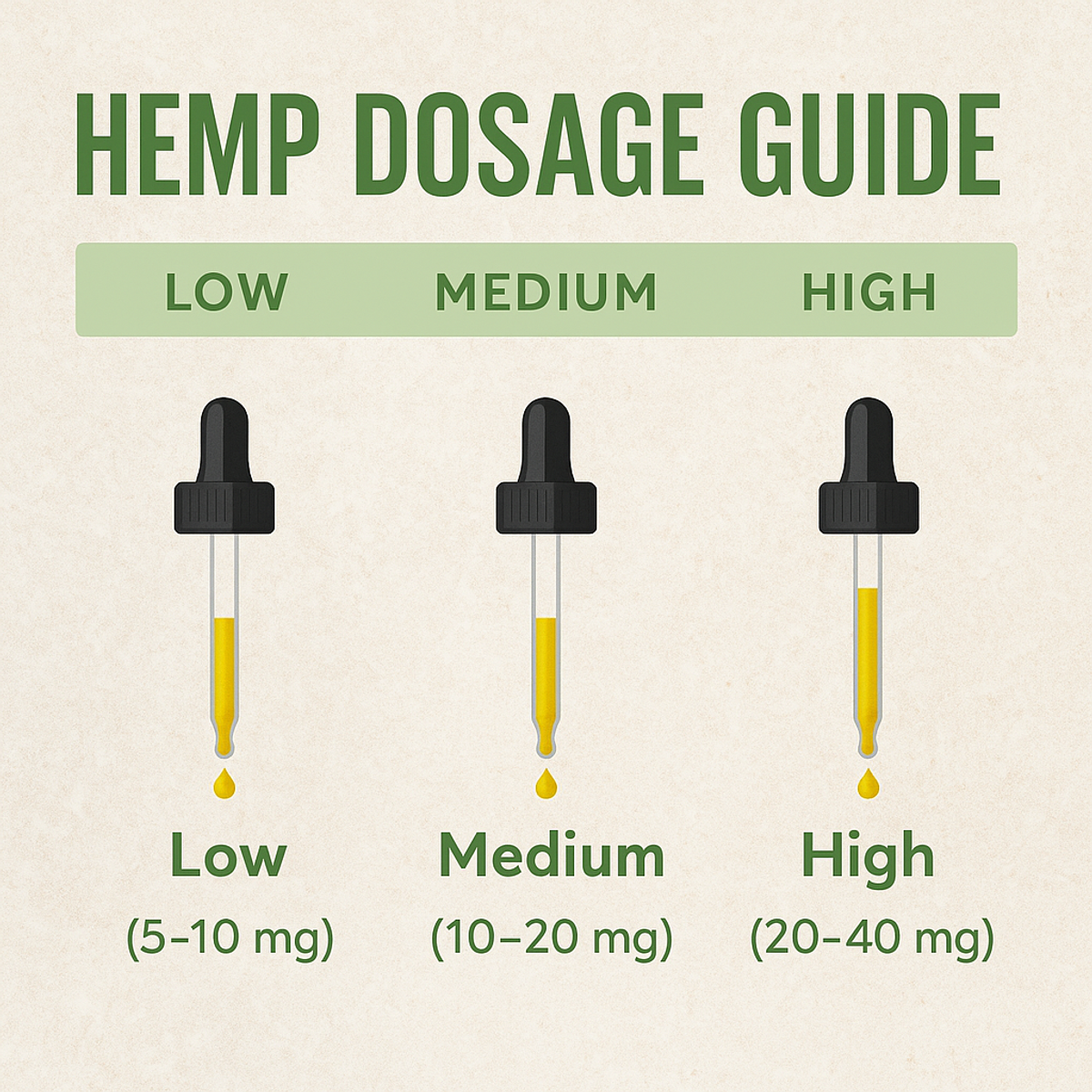
Hemp’s effects depend on the type of product, your body weight, and desired outcomes (e.g., relaxation, focus, sleep).
Most users start with small doses and gradually increase until the desired effect is achieved — a method known as “titration.”
🧾 Recommended Daily Dosage Ranges
Purpose
Suggested Dose
Notes
Relaxation / Mild Anxiety
10–20 mg CBD
Start low, increase slowly.
Pain Relief / Inflammation
20–50 mg CBD
Divide into 2–3 doses per day.
Sleep Support
25–40 mg CBD
Take 1 hour before bed.
General Wellness
10–25 mg CBD
Once daily for maintenance.
💡 Note: These guidelines apply to CBD-based hemp extracts, not recreational cannabis. Always consult your healthcare provider before starting.
Factors That Affect Dosage
1. Body Weight
Heavier individuals may need slightly higher doses for noticeable effects.
2. Product Type
- Tinctures and Oils: Absorbed sublingually for faster onset (15–30 mins).
- Capsules or Gummies: Longer onset (45–90 mins), but consistent dosing.
- Topicals: Localized relief for pain or skin conditions.
3. Concentration
Check the mg of CBD per serving — not just total bottle size.
4. Individual Tolerance
Your body’s endocannabinoid system (ECS) is unique; effects vary per person.
Hemp Product Labeling and Compliance
The FDA’s 2025 Hemp Product Guidance emphasizes clear, truthful labeling.
🧴 What to Look For on a Label
- ✅ THC content: Must be ≤ 0.3%.
- ✅ Certificate of Analysis (COA): Third-party lab report verifying purity.
- ✅ Serving size and dosage per unit.
- ✅ Ingredient list with natural, non-synthetic additives.
🚫 Avoid products making medical claims (“cures anxiety,” “treats cancer”) — these violate FDA policy.
Federal vs. State Enforcement in 2025
While hemp is federally legal, enforcement happens mostly at the state level.
Federal Oversight
- USDA: Regulates hemp cultivation standards.
- FDA: Oversees product safety and labeling.
State Oversight
- State agencies handle retail, testing, and compliance enforcement.
- Some states require hemp retailer licenses.
🧠 Pro insight: Most violations in 2024 came from improper labeling — not from THC content itself.
Safe Usage Guidelines
To get the best results from hemp while staying compliant, follow these simple safety rules:
✅ Start with a low dose (10–15 mg) and increase gradually.
✅ Use only lab-tested products with verified COAs.
✅ Avoid combining hemp with alcohol or sedatives without medical guidance.
✅ Store hemp oils and edibles in a cool, dry place away from sunlight.
The Future of Hemp Regulation
In 2025, new FDA hemp classifications are expected to create standardized dosing categories:
- “Wellness Supplements” (oils, capsules, gummies)
- “Topical Applications” (creams, balms)
- “Functional Foods” (beverages, protein powders)
This clarity will make it easier for consumers to understand how much to take — and for brands to ensure safety and compliance.
🌿 The goal: Transparency, consistency, and consumer trust across the hemp industry.
✅ Key Takeaways
- Hemp-derived CBD with <0.3% THC is federally legal in 2025.
- Start with 10–25 mg/day and adjust as needed.
- Always verify lab reports and FDA-compliant labeling.
- Check your state laws, especially for THC-free rules.
- The FDA continues to refine standards for safe dosage and product quality.
🌱 FAQs
Q: Is hemp the same as marijuana?
A: No. Hemp contains less than 0.3% THC and will not cause intoxication.
Q: Can I travel with hemp products?
A: Yes, within the U.S., as long as the product meets federal THC limits and is properly labeled.
Q: Are hemp edibles legal in all states?
A: Not yet — some states restrict CBD food products pending FDA clarification.
Q: Can I give hemp oil to my pet?
A: Only use products specifically labeled for pets, with veterinarian guidance.
Final Thoughts
The hemp landscape in 2025 is clear, but not static. Understanding dosage and legality ensures your hemp journey stays safe, effective, and compliant.
As regulations evolve, one truth remains: knowledge is your best protection — and your path to better wellness.