Hemp Laws and Regulations: Is Hemp Legal Where You Live?

Jonathan Sullivan
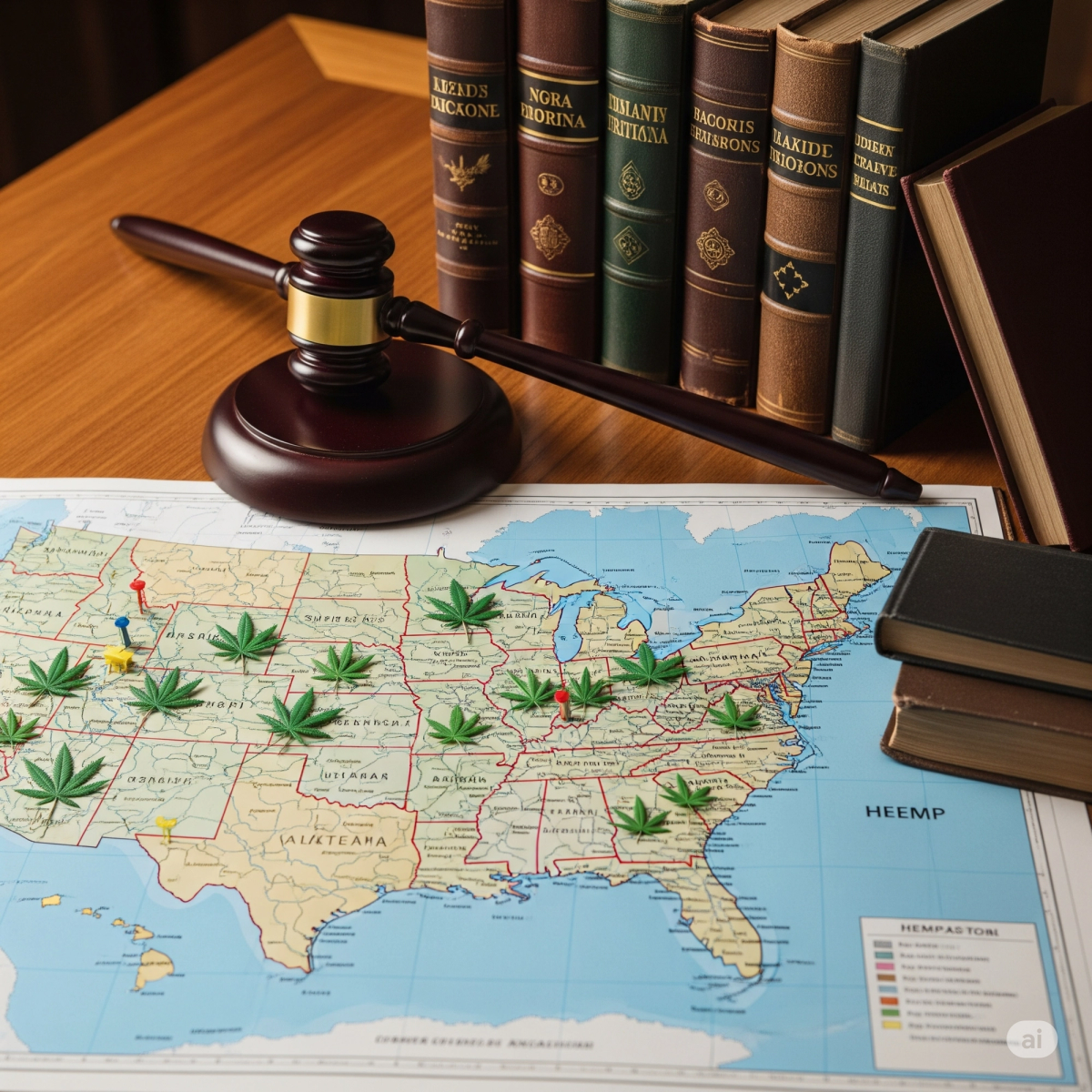
Hemp products seem to be everywhere these days – CBD oils, hemp lotions, hemp seeds at the grocery store. But a question I often hear is, “Wait, is this actually legal?” The answer is usually yes, but it’s a bit more complex than a simple thumbs up or down. Hemp laws can vary by country and even state. In this guide, we’ll break down the basics of hemp legality, focusing mostly on the U.S. (with a quick world tour too). By the end, you’ll know why you can buy hemp protein powder on Amazon without a hitch, but why some places might still give you trouble for a CBD gummy. Let’s dive in!
United States: Federally Legal, But Mind the Details
In the U.S., the game-changer was the 2018 Farm Bill (Agriculture Improvement Act of 2018). This law federally legalized hemp and hemp-derived products, as long as the hemp contains no more than 0.3% THC (dry weight). Essentially, hemp was removed from the Controlled Substances Act, where it had been lumped in with marijuana for decades. This means it is federally legal to grow hemp (with a proper license) and to manufacture and sell hemp products like CBD extracts, hemp seed foods, textiles, etc., across state lines.
But, there’s a catch: the Farm Bill lets states regulate hemp how they like, as long as they don’t violate federal minimums. States had to submit hemp farming plans to the USDA for approval or follow a federal plan. Now all 50 states have some form of hemp legality, but state laws can differ in what they allow.
For example:
- Idaho (famously strict) for a long time said, we only allow CBD products if they contain 0.0% THC – zero tolerance. Under that rule, a full-spectrum CBD oil (with trace 0.3% THC) that’s federally legal would not be legal in Idaho. (As of early 2025, Idaho has been considering easing up, but it’s still one of the most restrictive – if you’re in Idaho, double-check the latest rules before buying CBD).
- South Dakota initially was resistant to hemp after 2018, but by 2020 they passed hemp legislation too. Yet some local law enforcement attitudes lagged; there were tales of truckers hauling legal hemp through being arrested in a few states in 2019 due to confusion. Those cases have mostly resolved as understanding improves.
- Other states like Nebraska and Iowa were slow to embrace CBD sales at first. Nebraska law enforcement in 2019, for example, claimed CBD was still a controlled substance unless under a specific pilot program. By now, CBD is sold in those states, but with caution.
The key variation state to state often involves what kind of hemp products are allowed:
- Some states explicitly ban or restrict smokable hemp flower (concerned it’s indistinguishable from marijuana without a lab test).
- Some states set age limits (e.g., you must be 18 or 21 to purchase CBD products).
- A number of states have been cracking down on Delta-8 THC products (Delta-8 is a semi-synthetic cannabinoid often derived from hemp CBD that can get you high, and a legal gray area). As of 2025, around 20 states have banned or restricted Delta-8 THC specifically, even though it’s “hemp-derived,” due to safety concerns.
- Some states require registration or labeling for CBD sellers. For instance, Utah mandates QR codes on labels linking to lab tests. Indiana requires labels to have certain info and scannable codes.
- THC limits: Federal is 0.3% delta-9 THC in hemp. Some states extended that to total THC including THCA (which can convert to THC). A few states like Hawaii considered raising the limit to 1% THC for hemp but have not as of yet. Internationally, note Canada sets hemp THC limit at 0.3% for export but interestingly allows up to 0.3% THC in finished CBD products too, while EU has historically been 0.2% now moving to 0.3%.
In practical terms, if you’re in the U.S. and buying typical hemp products (CBD oil, hemp seeds, etc.) from reputable sources, you’re likely fine anywhere unless you run into a very outdated local law. All 50 states technically allow hemp-derived CBD, but some (like Idaho, Iowa, and maybe one or two others) require absolutely no THC present. If you live in one of these stricter states, you’d want to stick to broad-spectrum or CBD isolate products (which have non-detectable THC), just to be safe.
Will You Get in Trouble? (Enforcement Realities)
Right after 2018, there was confusion. But by now, consumer hemp products are mainstream. You can find CBD at CVS, Walgreens, or gas stations. This ubiquity means average folks aren’t getting arrested for a CBD lotion or a bottle of hemp seed oil. Law enforcement focus is not on hemp, with one big caveat: If a product looks like traditional marijuana (say, hemp flower you smoke), a cop might have reasonable suspicion until it’s tested. For instance, Texas briefly had a situation where they essentially stopped prosecuting minor marijuana possession because hemp legalization made it hard to prove something wasn’t hemp. Some states now equip labs or even field tests to distinguish.
The 2018 Farm Bill explicitly protects interstate transport of hemp, meaning you can drive/fly with your hemp products as long as they comply with federal definitions. That said, I always recommend keeping products in original packaging to show they’re clearly labeled hemp/CBD with <0.3% THC, just in case. Don’t, for example, travel with a baggie of unlabeled green plant material – that’s asking for confusion.
International Hemp Legality Brief
If you’re outside the U.S. or traveling:
- Canada: Hemp and even marijuana are legal nationally. Hemp-derived CBD is legal, but there are stricter rules on selling CBD as a “natural health product” – effectively, CBD is legal but only through certain licensed channels (it’s kind of in a gray zone unless sold in marijuana dispensaries).
- Europe: The EU recently raised the official hemp THC limit to 0.3% for crops (it was 0.2%). CBD is generally legal in most European countries, especially after a 2020 EU court ruling said CBD is not a narcotic and free commerce should apply. However, each country has its quirks. The UK allows CBD but products cannot have any detectable THC (so similar to Idaho-style – THC-free only). France historically allowed only isolate CBD (no full-spectrum with even trace THC), but is loosening up after EU pressure. It’s a bit patchy but trending toward acceptance. If in Europe, check specific country rules – e.g., Sweden treats CBD as a prescription medicine if it contains any THC.
- Asia: Many Asian countries are very strict. Japan allows CBD but it must have 0 THC (very strict testing). China currently bans CBD in cosmetics and doesn’t really allow internal use, even though they grow tons of hemp for fiber. Thailand interestingly legalized hemp and even cannabis to an extent recently – CBD is okay there. But places like Singapore, UAE, Malaysia – avoid CBD; it’s illegal and could get you in serious trouble.
- Latin America: Varies. Mexico technically legalized cannabis broadly but regulation is a mess in progress; CBD is sold though. Brazil and Chile allow CBD for medical use with prescription. Uruguay, like Canada, legalized everything.
- Australia/NZ: Hemp seed foods are legal (after some delay, they allowed it a few years ago). CBD is prescription-only in Australia (unscheduled low-dose CBD might become over-the-counter at pharmacies eventually, but slow moving). New Zealand similar – prescription route.
Hemp vs Marijuana in Legal Terms
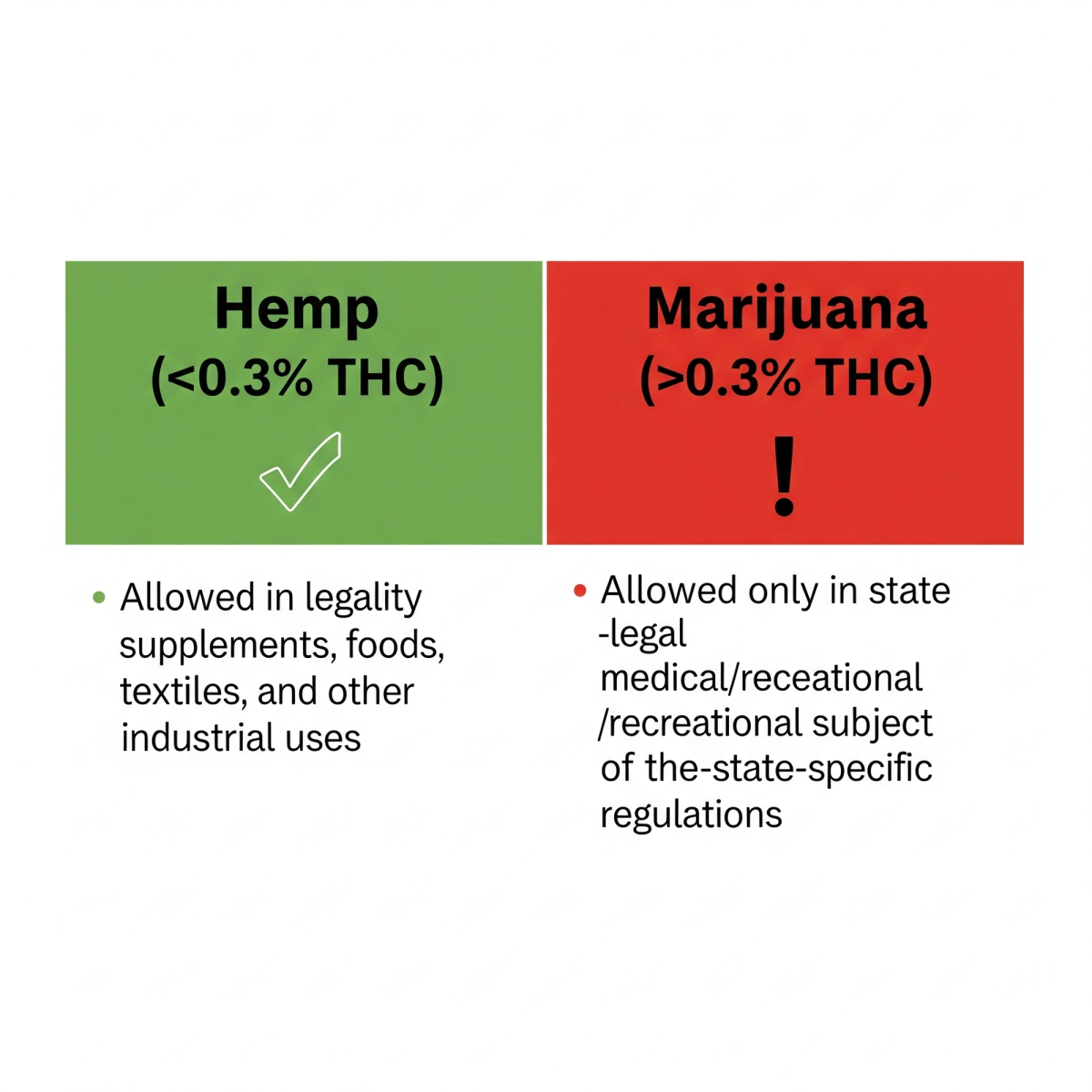
It’s important to note the definition of hemp: in U.S. law and many others, it’s basically cannabis (any Cannabis sativa plant) with THC content at or below 0.3%. If it’s 0.4% THC, legally it’s marijuana, not hemp, even if it’s the same plant variety. This definition came from a researcher’s suggestion in the 1970s and was adopted in laws. It’s somewhat arbitrary but is the line drawn.
Thus, farmers must test their hemp, and if a crop goes “hot” (above 0.3% THC), they often have to destroy it. The industry is pushing for perhaps a 1% limit to give farmers wiggle room (as some other countries use) – there’s speculation the next Farm Bill might adjust this, but nothing yet.
From a consumer perspective, this definition means that products labeled as hemp/CBD should have negligible THC. They won’t get you high and should be legal. Products with higher THC fall under marijuana laws (which in many states are only legal for medical or recreational use if you’re in a legalization state).
As of 2025, around 38 U.S. states allow medical marijuana, and 23 allow recreational for adults. If you’re in a legal marijuana state, you can access cannabis with higher THC freely (per state rules). If not, hemp CBD might be your only legal cannabis option – and thankfully that’s available essentially nationwide.
Some Legal Tips for Consumers
- Buy from reputable companies: They will provide third-party lab tests showing THC content is within legal limits (≤0.3%). This not only ensures legality but also quality (you don’t want more THC than labeled – could cause a failed drug test unexpectedly, and would be illegal).
- Check your state’s specifics: A quick web search like “<Your State> hemp CBD laws 2025” can verify if there are quirks (e.g., “no edibles”, or “no smokables”, or age limits).
- Traveling internationally: Don’t carry CBD into countries where it’s illegal. Even a CBD tincture could be problematic in, say, Singapore or the UAE. When in doubt, leave it home.
- Drug testing: Legality is one thing, but note that standard drug tests look for THC metabolites, not CBD. A hemp product could legally have up to 0.3% THC and potentially build up enough in your system to trigger a positive on a sensitive drug test. If your job depends on testing, opt for broad-spectrum or isolate products (0 THC) and be cautious.
In Summary
Hemp is legal in the United States at the federal level, and you can generally buy and use hemp-derived products in any state – but you should be aware of minor state-specific regulations, especially regarding THC content and product types. Internationally, hemp laws are a mixed bag, but many countries are aligning with the idea that non-intoxicating hemp products should be permitted.
The post-2018 world has really opened up access to hemp. You can sip hemp tea in Texas, rub CBD cream on your knee in Florida, or snack on hemp granola in New York without issue. As always when laws evolve, some nuances linger, but the trend is towards wider acceptance. Stay informed (laws can update), buy smart, and you can confidently enjoy the benefits of hemp without worrying if Big Brother is watching. Hemp has shed its illicit stigma and is now legally planting its roots in modern wellness and industry – and likely in your state, too.