Hemp 101: Everything You Need to Know About the World’s Most Versatile Plant (2025 Edition)

Jonathan Sullivan
Hemp 101: Everything You Need to Know About the World’s Most Versatile Plant (2025 Edition)
If there’s one plant that has stood the test of time — and is now redefining the future — it’s hemp.
From ancient ropes and sails to modern wellness products and eco-friendly textiles, hemp has proven itself a sustainable powerhouse. Yet, many still confuse it with marijuana or wonder why it’s suddenly everywhere in 2025.
This guide breaks it all down in plain English: what hemp is, how it’s used, and why it’s considered one of the greenest crops on Earth.
🌱 What Is Hemp?
Hemp is a variety of the Cannabis sativa plant, cultivated specifically for industrial, nutritional, and wellness uses.
Unlike marijuana, hemp contains very low levels of THC (≤ 0.3%), meaning it cannot get you high. Instead, it’s rich in beneficial compounds like CBD (cannabidiol) and omega fatty acids.
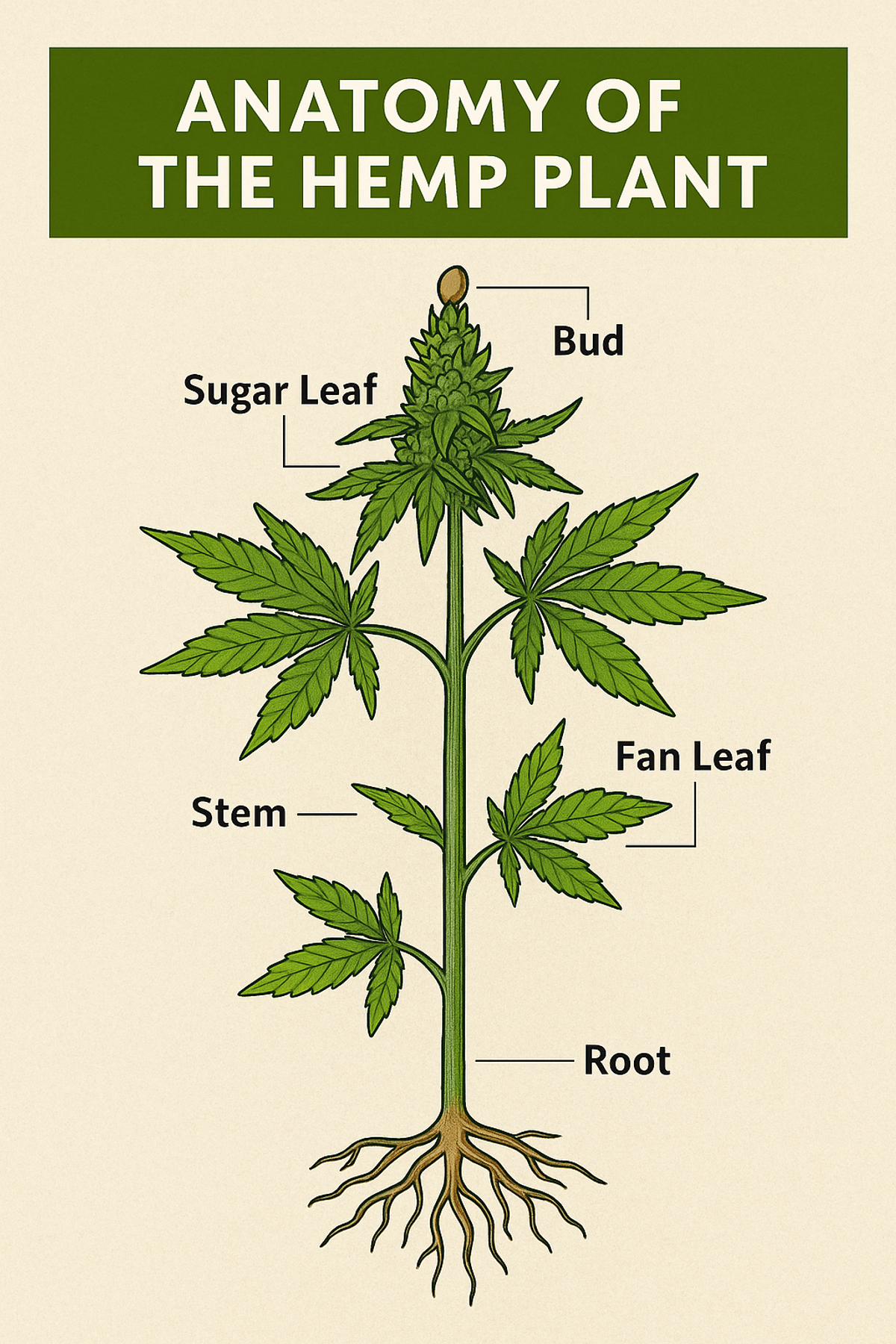
Quick Hemp Facts
- 🌿 Scientific name: Cannabis sativa L.
- ⚖️ THC content: ≤ 0.3% (legal limit in the U.S.)
- 🌎 Grows in: Over 70 countries
- 🌾 Harvest time: About 100–120 days
- 🔁 Sustainability: Restores soil and captures carbon efficiently
💡 Fun fact: Hemp grows four times faster than trees and absorbs more CO₂ per acre.
📜 A Brief History of Hemp
Hemp’s story spans thousands of years and cultures.
- 8000 BCE: Used in ancient China for rope, fishing nets, and textiles.
- 1600s: American colonies required farmers to grow hemp for sails and cloth.
- 1937: U.S. bans hemp under the Marijuana Tax Act.
- 2018: Farm Bill legalizes industrial hemp again.
- 2025: Hemp is booming globally as a renewable resource.
🏛️ Today, hemp farming supports sustainable construction, renewable energy, and plant-based wellness industries worldwide.
🌿 Hemp vs. Marijuana: What’s the Difference?
Category
Hemp
Marijuana
THC (psychoactive compound)
≤ 0.3%
5–30%+
CBD content
High
Variable
Use
Industrial, health, textiles, food
Recreational, medicinal
Legal Status (U.S.)
Federally legal
Regulated state by state
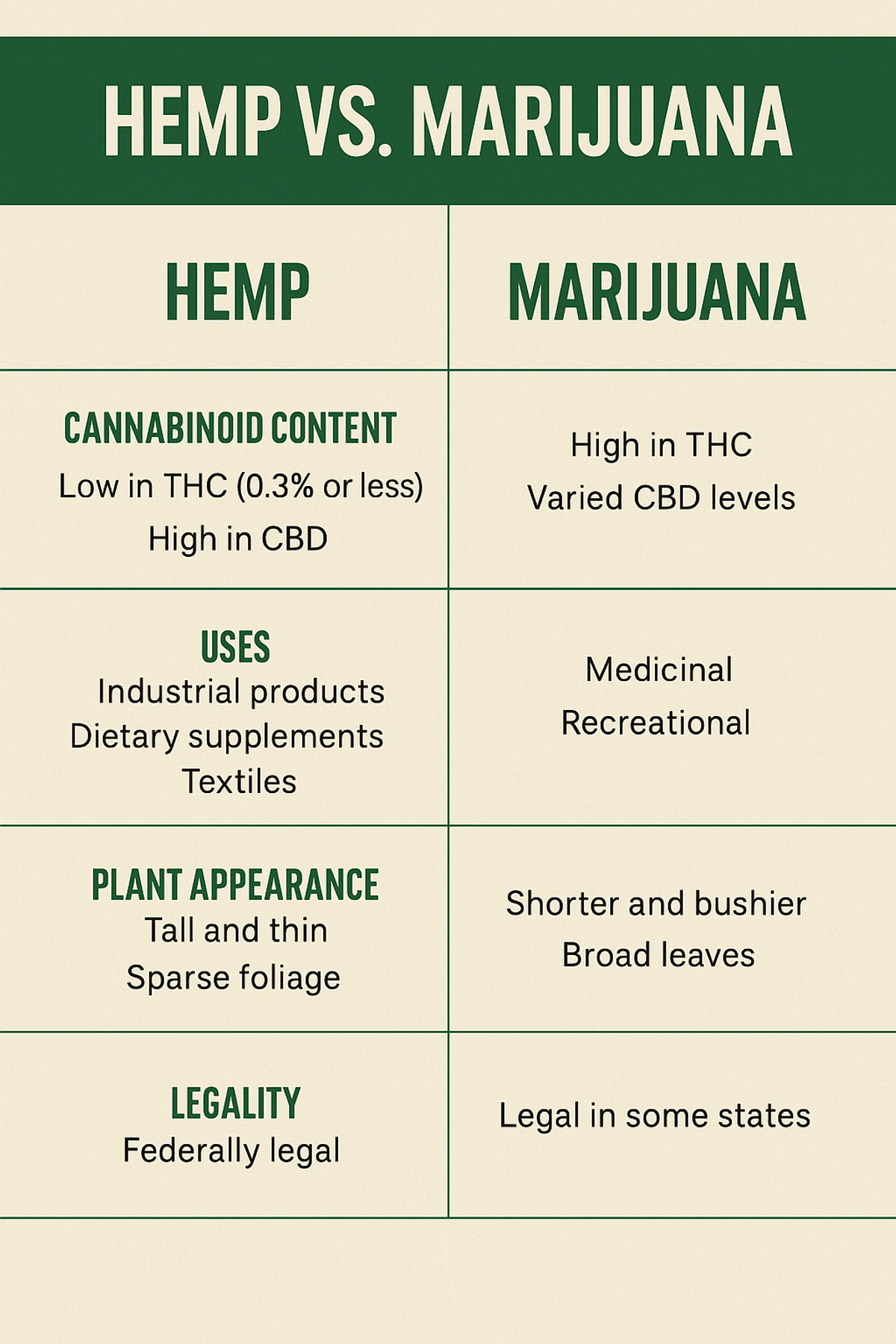
🧠 Remember: Hemp is cannabis, but not all cannabis is hemp.
💪 Top Uses of Hemp in 2025
Hemp is one of the most diverse plants ever cultivated. Every part — from seed to stalk — has practical value.
🌾 1. Food & Nutrition
- Hemp seeds are rich in protein, fiber, and omega-3s.
- Hemp oil supports heart health and skin hydration.
- Hemp protein powder is a vegan alternative for athletes.
🧵 2. Textiles & Fashion
- Hemp fibers are stronger than cotton and naturally antimicrobial.
- Requires 50% less water than cotton.
- Used in clothing, bags, and sustainable shoes.
🏗️ 3. Construction (Hempcrete)
- Hempcrete combines hemp hurds with lime to make carbon-negative bricks.
- Fire-resistant, mold-resistant, and highly insulative.
🧴 4. Skincare & Wellness
- Hemp oil is a common ingredient in lotions and serums.
- CBD-infused hemp extracts help with relaxation and balance.
🌍 5. Environmental Sustainability
- Absorbs CO₂ and improves soil quality.
- Can replace plastics with biodegradable hemp composites.
- Supports regenerative agriculture.
♻️ Key takeaway: Hemp’s applications span nearly every industry — from health to housing.
⚖️ Is Hemp Legal in 2025?
Yes — industrial hemp is federally legal in the U.S. under the 2018 Farm Bill, as long as it contains less than 0.3% THC.
Important Notes for 2025
- Hemp-derived CBD is legal nationwide, but FDA restrictions still apply to edibles and medical claims.
- Farmers must register with state hemp programs.
- Most global regions now regulate hemp cultivation, allowing trade and research expansion.
🚜 In 2025, hemp is one of the fastest-growing agricultural markets worldwide — projected to exceed $25 billion by 2030.
🌾 How Hemp Supports a Sustainable Future
Hemp’s environmental benefits are undeniable:
- Restores soil health: Its deep roots prevent erosion and remove toxins.
- Reduces deforestation: Hemp paper can replace wood pulp.
- Requires fewer pesticides: Naturally resistant to pests and fungi.
- Captures carbon: Each acre absorbs up to 22 tons of CO₂ annually.
🌱 Bottom line: Hemp isn’t just a crop — it’s a climate solution.
🧩 FAQs: Hemp 101
Q: Can hemp make you high?
A: No. With ≤ 0.3% THC, hemp is non-psychoactive.
Q: Is hemp the same as CBD?
A: Not exactly — CBD is one compound found in hemp.
Q: Can I grow hemp at home?
A: Only if your state allows it under an industrial hemp license.
Q: Why is hemp considered sustainable?
A: It grows quickly, restores soil, and requires minimal resources.
✅ Key Takeaways
- Hemp is a non-intoxicating, eco-friendly crop with endless uses.
- Legal and booming in 2025 across health, fashion, and construction.
- Supports soil restoration, carbon reduction, and sustainable innovation.
🌿 Hemp truly is the plant of the future — and its roots are deep in our past.