Inside the Hemp Plant: Anatomy, Cultivation, and Uses

Jonathan Sullivan
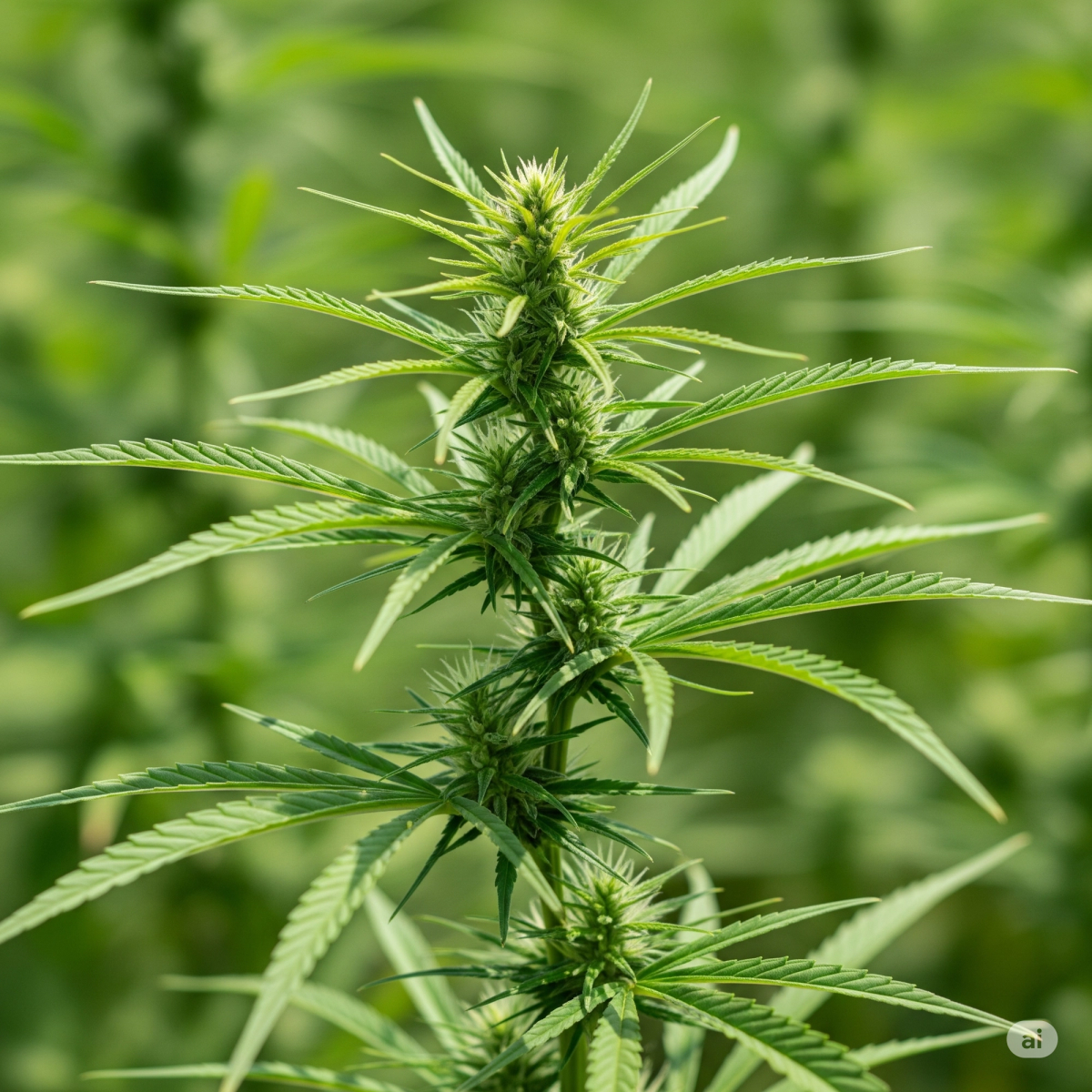
Hemp isn’t just a buzzword – it’s a real plant, with roots, stems, leaves, flowers, and seeds. But what do we actually know about this green multi-tasker’s inner workings? In this post, we’re going inside the hemp plant to understand its anatomy and how it’s grown. We’ll also break down which parts of the plant are used for what (spoiler: almost every part finds a purpose!). Whether you’re a gardening geek or just curious how hemp goes from seed to all those products on shelves, this guide will grow your knowledge.
Anatomy of the Hemp Plant
At first glance, a hemp plant looks like… well, a typical cannabis plant – tall, herbaceous, and bright green. But let’s peel back the layers and look at each part:
- Roots: Hemp plants have a strong taproot that digs deep into soil, sometimes three feet or more, with a network of smaller rootlets. These roots anchor the plant and help it access water and nutrients deep down. Fun fact: hemp’s deep roots can also help loosen and aerate soil, benefiting the next crops in rotation. Historically, hemp has even been used for phytoremediation – its roots can help clean up contaminated soil by absorbing heavy metals (truly a do-gooder plant!).
- Stalk (Stem): The hemp stalk is like the plant’s backbone. It’s tall, fibrous, and can reach heights of 6 to 15 feet depending on variety and conditions. The stalk has two main layers:
- Bast fibers: These are the long, stringy fibers on the outside of the stalk, running the length of the plant. Bast fibers are what we turn into textiles, ropes, and other strong fiber products. Hemp bast fibers are known for being very strong and durable – among the strongest natural fibers.
- Hurd (Shiv): Inside the stalk is a woody core called the hurd. If you snap a dry hemp stalk, the brittle inner wood that breaks is the hurd. It’s lightweight and absorbent. Hurds are used for things like animal bedding, building materials (like hempcrete and fiberboard), and even as a source for paper pulp.
- The stalk also contains a nutrient-rich fluid when fresh (kind of like a sap) that can be processed for various byproducts. But primarily, when we talk about hemp stalks, it’s all about those fibers and woody core.
- Leaves: Hemp leaves are the iconic cannabis-looking leaves: typically palmate with 5-7 serrated leaflets (think of a classic leaf silhouette you see in logos). They are generally thinner and fewer on hemp plants grown for fiber (which focus energy on height). Hemp leaves, especially the larger fan leaves, can be used as mulch or compost, and some folks even juice raw hemp leaves for a nutrient-rich drink (they contain no high-inducing THC, just lots of leafy goodness). The leaves also play a role in photosynthesis, obviously, powering the plant’s growth with sunlight.
- Flowers: Yes, hemp has flowers! But they’re not showy petals; these are greenish, pinecone-like clusters found on the hemp plant’s tops and branches. Hemp is typically dioecious, meaning there are male and female plants (though some modern hybrids can be monoecious).
- Female hemp plants produce flowers (buds) that, if not pollinated, grow resinous bracts (in drug cannabis these would be the THC-rich buds). In industrial hemp, these buds contain cannabinoids like CBD (especially in varieties grown for CBD extraction) but still only trace THC. These flower clusters are where hemp seeds will form if pollinated.
- Male hemp plants produce smaller, pollen-shedding flowers – basically pollen sacs – which fertilize females. In fiber or CBD cultivation, male plants are usually not desired (in fiber, they die off early; in CBD, they’d seed the females and reduce cannabinoid yield). But male hemp plants have super soft fibers and were traditionally valued for fine textiles like linen-quality cloth.
- When hemp is grown for seed, you want those females to get pollinated and make lots of seed. Those fields will have both males and females doing their natural dance.
- Seeds: Hemp seeds are tiny hard-shelled nuts (about the size of a peppercorn or a grain of quinoa). Inside the crunchy shell is a soft, nutty kernel – the part we eat as “hemp hearts.” If allowed to mature, hemp plants can produce tons of seeds – literally. An average acre of hemp grown for seed might yield hundreds of pounds of seeds. These seeds do not contain cannabinoids (no CBD or THC), but they are packed with nutrients like protein, omega-3 and omega-6 fatty acids, and fiber. Hemp seeds are the source of hemp seed oil (extracted by pressing) and a variety of food products. They’re also, of course, the next generation – plant one and you can grow a new hemp plant (laws permitting!).
Each part of the hemp plant serves a purpose, which is why there’s an often-quoted line that hemp has “over 20,000 uses.” Let’s see how farmers actually cultivate this plant to maximize those useful parts.
How Hemp is Cultivated
Growing hemp can be quite different depending on what you’re growing it for. Think of hemp as a multipurpose crop that can be “steered” in a certain direction by farming techniques:
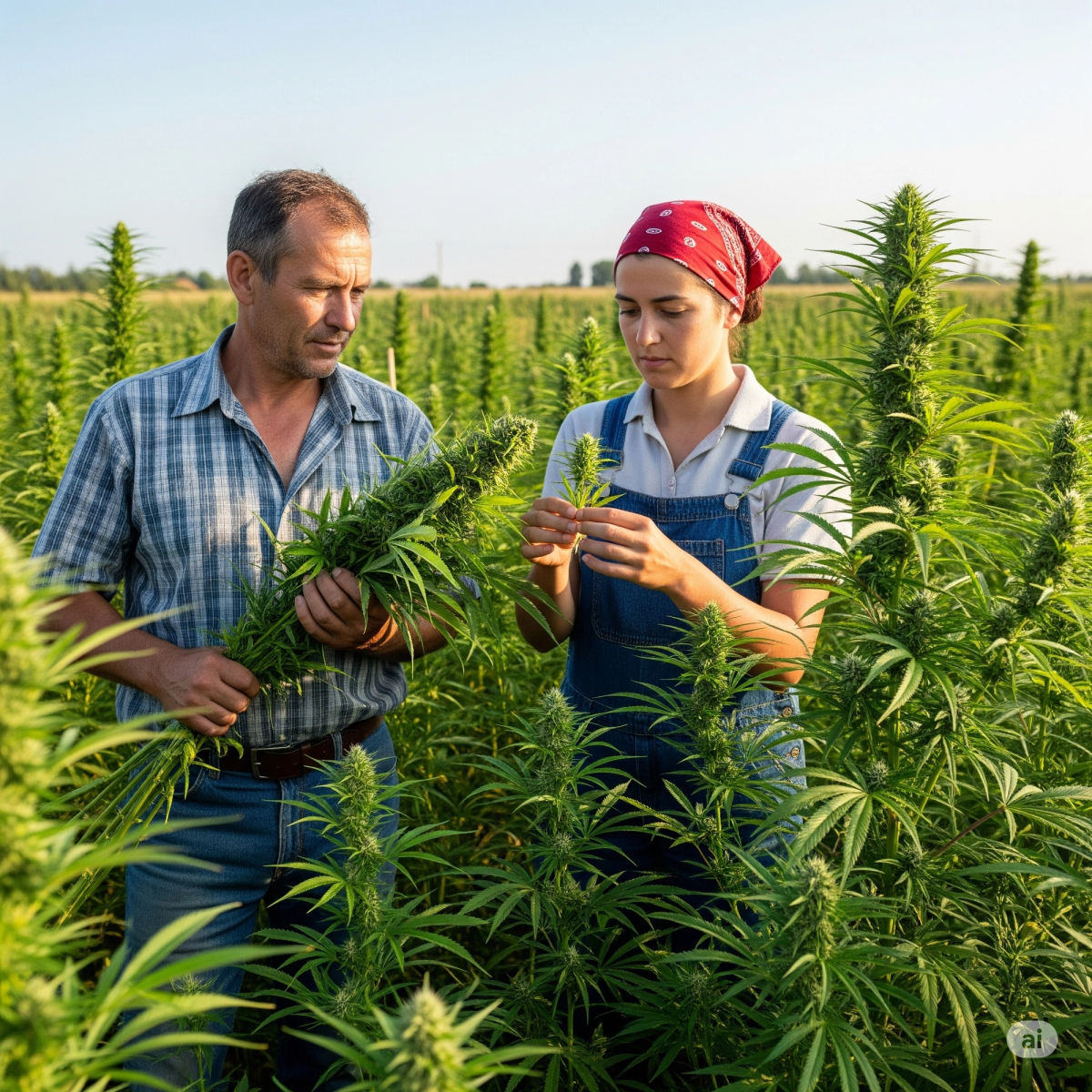
- Hemp for Fiber: When the goal is long fibers for textiles or industry, farmers plant hemp seeds very close together, like densely. We’re talking rows just a few inches apart and seeds sown thickly. This encourages the plants to grow tall and straight (competing for light), with minimal branching. These hemp plants might shoot up 10-15 feet with slender stalks. They’re typically harvested when they start to flower but before seeds set, to maximize fiber quality. After harvest, the stalks undergo “retting” (exposure to moisture and microbes) to break down the pectins binding fiber to hurd, making it easier to separate them. In days past, retting was done by laying stalks in the field (dew retting) or in water. Today, more controlled methods or machines might do it. The result is bundles of bast fiber ready for processing into things like yarn or matting.
- Hemp for Seeds: For seed production, the planting is usually less dense to allow more branching and flowering. Varieties chosen are ones that make lots of seeds. Farmers will have both male and female plants in the field (since pollination is needed for seeds). These plants might be shorter, maybe 6-8 feet, but bushier. They’ll let them flower and pollinate, then wait for seed heads to mature (kind of like letting a grain crop ripen). Harvesting seeds can be tricky – it often involves a combine harvester, similar to how canola or flax seeds are harvested. Timing is important so seeds are ripe but not shattering (falling off). After harvest, seeds are cleaned, dried, and can be used for food products or next year’s planting stock. One thing: harvesting hemp seed can sometimes be like walking a tightrope, because if the plants are too mature, the fiber in the stalk can start wrapping on equipment. It’s an art!
- Hemp for CBD/Flower: This is a newer style of hemp farming, akin in some ways to marijuana cultivation. These hemp varieties are basically cannabis bred to be high in CBD and almost zero THC. Farmers (or indoor growers) give these plants more space and often care individually for them. Picture rows with a few feet between plants, so each plant can become a bushy Christmas tree shape loaded with flowers. Only female plants are desired (no seeds wanted, because seeds would reduce CBD and make extraction messy). Some growers even use greenhouse or indoor setups with lights for maximum control. Harvest is like marijuana – cut the plants when flowers are ripe with sticky resin, then dry and cure them. The end product might be sold as CBD-rich hemp flower (some people smoke or vape it like a non-high alternative) or more commonly, it’s extracted in a lab to pull out CBD for oils, tinctures, etc. This kind of hemp farming is labor-intensive but can be quite profitable, which is why it boomed after legalization. It’s not uncommon to see “hemp farms” that look visually more like cannabis farms, with drip irrigation, pruning, and even hand-harvesting of cola buds.
Now, hemp is generally a robust plant. It’s often praised for growing “like a weed” (pun intended). It can thrive in a range of climates – from temperate regions to more tropical areas – though it prefers well-drained soil and good sunlight. It grows fast – most varieties are ready to harvest in 90-120 days from planting. Notably, hemp usually requires less water than crops like cotton, and often can be grown with little to no pesticides because it’s naturally hardy and its dense canopy can suppress weeds. This is part of hemp’s appeal as a sustainable crop.
However, hemp isn’t completely fuss-free. It does like nutrients (nitrogen, especially, if you want big yields). Farmers need to be careful about cross-pollination (a hemp CBD farm can be ruined if a neighboring farm’s males send pollen and seed out your crop). And harvesting equipment needs to be tough – hemp fiber can be notoriously tough on machinery because it’s so strong (imagine trying to cut and process long strands of the strongest natural fiber – it can gum up blades and gears).
Parts and Their Uses
Let’s match the anatomy to its uses, summarizing which part of the hemp plant goes where:
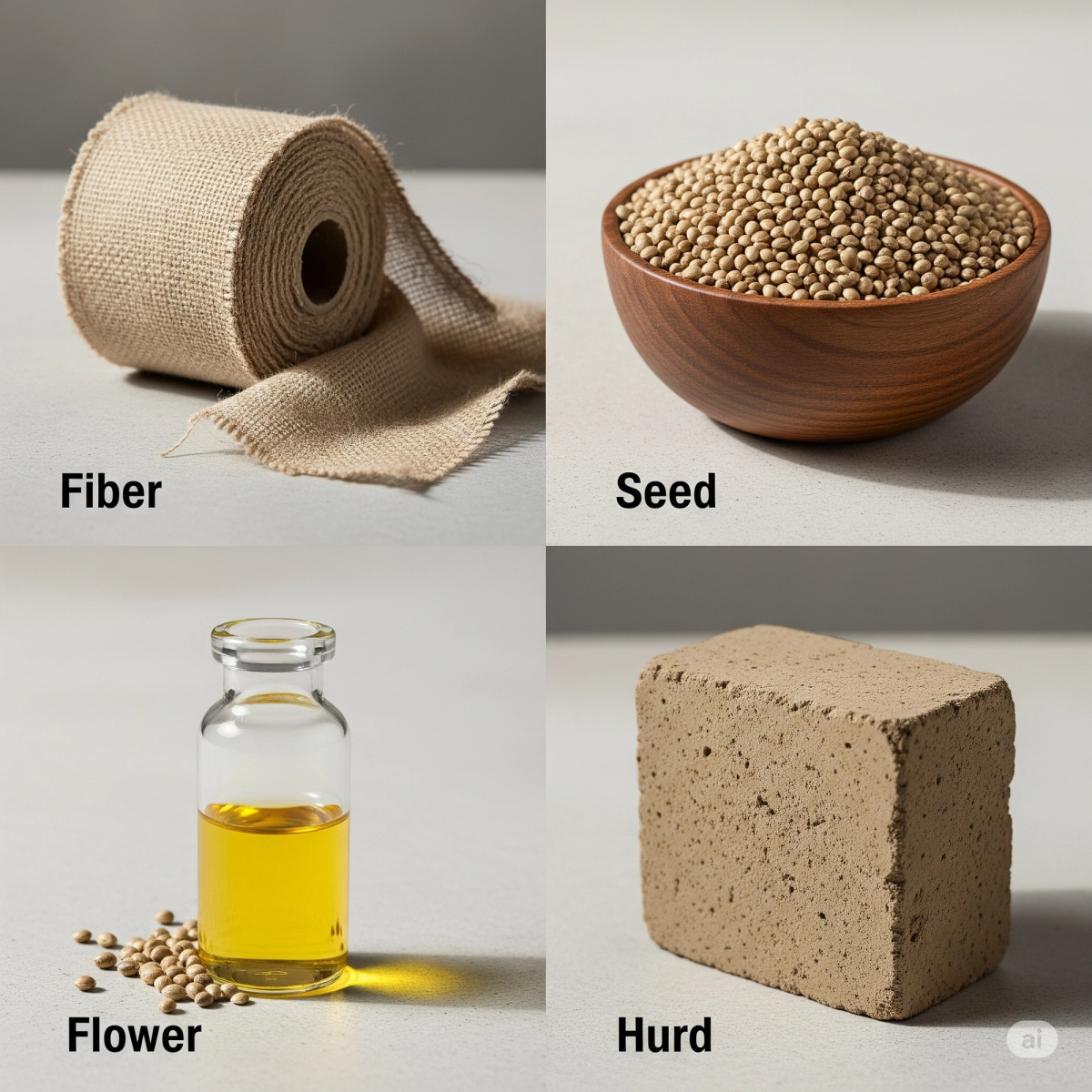
- Seeds: Edible products (shelled hemp hearts, hemp seed protein powder, hemp cooking oil), personal care (hemp seed oil is in lotions, soaps, cosmetics because it’s moisturizing), and even animal feed (hemp seed cake leftover from oil pressing is a protein-rich feed for livestock or pets). Seeds are nutritional powerhouses, boasting around 25-30% protein and a perfect 3:1 ratio of omega-6 to omega-3 fatty acids. They taste kind of like mild sunflower seeds or pine nuts, making them easy to love in recipes.
- Bast Fiber (Outer stalk): Textiles (clothing, shoes, bags – often blended with cotton or silk for softness), ropes, twines, canvas, carpets, specialty papers (cigarette papers, banknotes, archival paper that resists yellowing – historical documents on hemp paper have survived centuries). Also used in modern composites (mixed with plastics for car door panels or furniture). Because hemp fiber is mildew-resistant and absorbs dyes well, it’s great for fabrics and even for things like all-natural rugs.
- Hurd (Inner core): Animal bedding (hurd is super absorbent and soft when chopped – great for horse stalls, chicken coops, etc.), building materials (hempcrete uses hurd mixed with lime; hurds also go into particle boards, insulation, plaster), and garden mulch. There’s research into converting hemp hurds into biofuels or charcoal as well, due to their high cellulose content.
- Flowers/Leaves: If from a CBD variety, the flowers are harvested for cannabinoid extraction (to make CBD oils, isolates, etc.). Even in fiber crops, the leaves and flowers (which have minimal cannabinoids) can be collected for hemp essential oil (yes, hemp has aromatic terpenes that can be distilled into essential oil, used in fragrances or therapeutic oils). Some hemp leaves and flowers become animal feed or are tilled back into soil for nutrients. In countries where it’s allowed, hemp flowers can be smoked or brewed into calming teas (since they might have CBD or other soothing compounds but legally negligible THC). Hemp topicals like salves and lotions often use extracts from the flowers as well.
- Whole Plant Uses: Some applications literally use whole chopped hemp plants – for example, hemp biomass can be pelleted for heating fuel, or fermented into ethanol. Also, in permaculture, whole hemp plants (post-harvest) can be composted to return organic matter to fields, improving soil structure.
Hemp’s many parts working in harmony is why people say you can use “every part of the hemp plant.” It’s not far from the truth. Interestingly, the versatility of hemp is driving innovations: researchers are looking at hemp roots for potential medicinal compounds, and hemp’s carbon-rich stalks for making graphene-like materials for batteries (science fiction-ish, but real experiments are happening!).
The Future: From Field to Product
Cultivating hemp is experiencing a renaissance. Modern farmers are experimenting with dual-purpose crops (harvesting both seeds and fiber from the same plants by careful timing). Breeders are developing new hemp strains – some optimized for northern climates with shorter seasons, others for higher CBD yield without THC, and some that are auto-flowering (not day-length dependent) for more flexible planting.
For consumers, this complex journey of the hemp plant’s growth and processing results in a simple reality: we get to enjoy a huge array of hemp-derived goods. Next time you munch on a hemp granola bar, or admire your comfy hemp-blend t-shirt, or even insulate your house with hempcrete, you’ll know exactly which part of the humble hemp plant made it possible. From its robust roots to its sun-seeking leaves and seed-bearing tops, hemp is a plant that gives generously of itself.
Understanding hemp’s anatomy and cultivation isn’t just trivia; it deepens our appreciation for how resource-efficient this plant is. It grows fast, wastes little, and nourishes both earth and industry. As we look toward a sustainable future, hemp’s clever use of every part of itself might be a blueprint for how we use resources: fully, wisely, and with respect for what nature provided. The next time you see a hemp field, you’ll see more than just green plants – you’ll see fiber, fuel, food, and medicine swaying in the sunlight, all in one.