How Hemp Is Powering the Green Revolution: Sustainability in 2025

Jonathan Sullivan
How Hemp Is Powering the Green Revolution: Sustainability in 2025
In the age of climate change, few crops have captured global attention quite like hemp. Once banned and misunderstood, hemp is now making a powerful comeback — not just as a health product, but as an environmental hero.
In 2025, hemp has earned its title as the “miracle plant” of sustainability, helping reduce carbon emissions, restore soil, and replace plastic and concrete with greener alternatives.
Let’s explore how this ancient plant is shaping the future of our planet.
Why Hemp Is the Ultimate Sustainable Crop
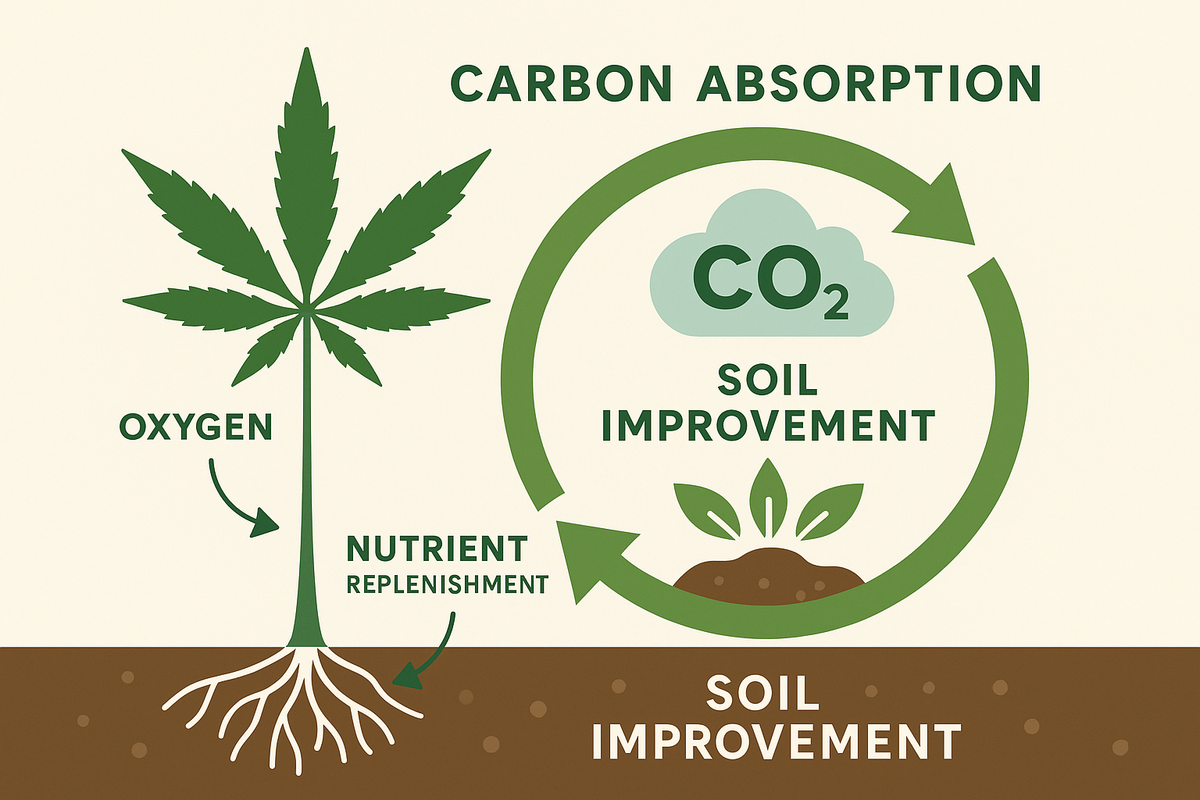
Unlike most industrial crops, hemp grows fast, needs little water, and doesn’t rely on harmful chemicals or pesticides. Its deep root system aerates soil and prevents erosion — all while capturing significant amounts of carbon from the atmosphere.
🌎 Key Environmental Benefits
- Carbon Capture: Hemp absorbs up to 22 tons of CO₂ per hectare, outperforming forests.
- Low Water Use: Requires up to 50% less water than cotton.
- Soil Regeneration: Detoxifies and replenishes soil nutrients.
- Zero Waste: Every part of the plant (seeds, stalks, leaves) is usable.
- No Pesticides Needed: Naturally pest-resistant, reducing chemical pollution.
📸 See image: hemp-carbon-capture.jpg
💡 Quick fact: Hemp can be grown in 100 days — making it one of the fastest renewable crops in the world.
Hemp’s Role in Combating Climate Change
Hemp’s greatest contribution to sustainability may be its ability to absorb and store carbon dioxide while creating long-lasting, eco-friendly materials.
When used in building materials like hempcrete, textiles, or paper, the carbon absorbed by hemp stays locked inside those products for decades — effectively removing it from the atmosphere.
🌱 How Hemp Helps the Planet
- Carbon-negative buildings: Hempcrete continues to absorb CO₂ as it hardens.
- Plastic replacement: Hemp bioplastics are biodegradable and recyclable.
- Deforestation reduction: Hemp paper can be made in a fraction of the time compared to trees.
📸 See image: hempcrete-wall.jpg
🌿 Did you know? A single acre of hemp absorbs more CO₂ than an acre of trees — and it grows four times faster.
From Field to Future: Sustainable Hemp Industries
🧱 Hempcrete Construction
Builders are embracing hempcrete as an eco-friendly alternative to concrete.
- Lightweight and mold-resistant
- Naturally insulating
- Fireproof and carbon-negative
Hempcrete homes are now being developed in Texas, Oregon, and the UK, setting new green building standards.
👕 Sustainable Fashion
Hemp textiles are durable, breathable, and require far fewer resources than cotton.
Why brands love hemp fabric:
- Biodegradable and long-lasting
- Naturally UV- and odor-resistant
- Softens with each wash
Fashion labels like Patagonia and Levi’s have adopted hemp blends to reduce waste and water use.
📸 See image: hemp-fabric-rolls.jpg
🚜 Regenerative Farming
Farmers are turning to hemp as a soil-restoring rotation crop.
- Improves soil health between harvests
- Removes toxins through phytoremediation
- Provides additional income from seeds and stalks
In 2025, the U.S. Department of Agriculture (USDA) expanded hemp pilot programs to include carbon-credit incentives, rewarding farmers for growing sustainable hemp.
The Circular Economy: Zero Waste Hemp
Every part of the hemp plant serves a purpose:
Plant Part
Common Use
Environmental Benefit
Seeds
Food, oil, supplements
Nutrient-rich, low waste
Stalks
Fiber, textiles, construction
Biodegradable, replaces plastics
Leaves
Compost, animal feed
Returns nutrients to soil
Flowers
CBD and wellness products
High value with minimal waste
♻️ Key takeaway: Hemp fits perfectly into a circular economy — nothing wasted, everything reused.
Legal & Global Expansion in 2025
By 2025, more than 70 countries have legalized industrial hemp cultivation.
Leading regions:
- United States: Expanding hempcrete construction and hemp biofuel programs.
- European Union: Subsidizing hemp farmers for climate resilience.
- Asia-Pacific: Integrating hemp into textile manufacturing and bioplastics.
Global demand for sustainable hemp products is expected to surpass $25 billion by 2030 (Statista, 2025).
✅ Key Takeaways
- Hemp is one of the most sustainable crops for soil, air, and industry.
- It replaces plastics, cotton, and concrete with eco-friendly alternatives.
- Hemp supports carbon-negative farming and regenerative soil practices.
- The global hemp economy is booming — and it’s leading the green revolution.
🌱 FAQs: Sustainability in Hemp
Q: Is hemp farming really better for the environment than cotton?
A: Yes — hemp requires half the water, no pesticides, and produces stronger fibers.
Q: Can hemp replace all plastics?
A: Not yet, but hemp-based bioplastics can significantly reduce petroleum plastic waste.
Q: How is hemp carbon-negative?
A: It absorbs more CO₂ than it emits through production and locks that carbon into products like hempcrete and textiles.
🌍 Final Thoughts
As we look toward a greener future, hemp stands as a symbol of renewable innovation and environmental healing.
Whether it’s in the clothes we wear, the homes we build, or the fields we cultivate, hemp reminds us that sustainability doesn’t have to mean sacrifice — it means smarter choices.
The world is going green, and hemp is leading the way. 🌿