Why Hemp Is One of the Most Sustainable Crops on Earth: A 2025 Guide

Jonathan Sullivan

Why Hemp Is One of the Most Sustainable Crops on Earth: A 2025 Guide
If there’s one plant that has captured the attention of environmentalists, farmers, and sustainable brands all at once, it’s hemp. Once restricted for decades, hemp has surged into the spotlight as a regenerative crop with enormous potential. Its low environmental footprint, fast growth cycle, and extraordinary versatility make hemp a unique tool in the global push toward greener industries.
In 2025, hemp is not just a trendy ingredient—it’s a serious solution to climate, waste, and agricultural challenges. Here’s why.
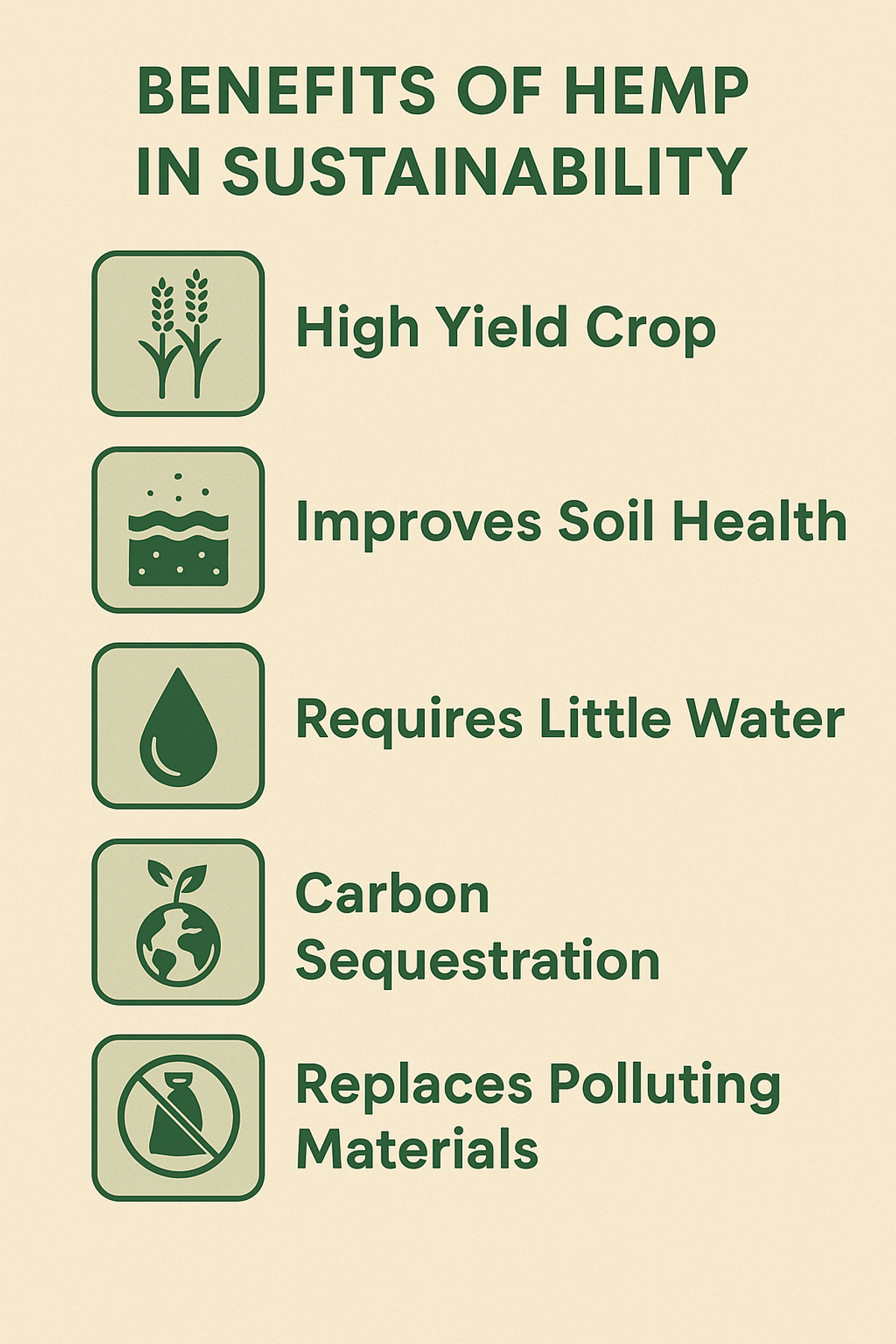
What Makes Hemp Such a Sustainable Crop?
Hemp isn’t valuable only because of what it produces—but how it grows. Unlike many conventional crops, hemp requires fewer chemicals, enriches the soil, and delivers high yields per acre.
Here are the biggest sustainability advantages.
1. Hemp Grows Extremely Fast
Hemp grows 10–15 feet in 70–120 days, making it one of the fastest-growing crops in the world. This rapid growth rate:
- Reduces land use compared to slower-growing crops
- Enables multiple harvests in some climates
- Produces large amounts of raw material with less time and water
A crop that grows faster uses fewer resources—and leaves a smaller footprint.
2. Hemp Uses Less Water Than Cotton
Cotton is notorious for its water consumption. Hemp, by contrast, typically requires 30–50% less water and grows successfully in a wider range of climates.
This makes hemp a strong alternative for:
- Textiles
- Rope and twine
- Apparel
- Home goods
Hemp fabrics also last longer, reducing waste and replacement cycles.
3. Hemp Requires Few (If Any) Pesticides
Because of its natural resilience, hemp resists:
- Many insects
- Mold
- Fungal diseases
In many regions, hemp can be grown with no pesticides at all, reducing chemical runoff and harm to waterways.
4. Hemp Improves Soil Health
Hemp is a powerful tool for regenerative agriculture. It supports soil improvement by:
- Providing deep roots that reduce erosion
- Breaking up soil compaction
- Pulling toxins and heavy metals from contaminated soil (phytoremediation)
- Returning nutrients through leaf drop and crop residue
Hemp is even used at former industrial sites to help rehabilitate damaged landscapes.
5. Hemp Captures More Carbon Than Most Crops
Hemp absorbs more CO₂ per acre than most trees. Some estimates suggest hemp captures up to 15 tons of CO₂ per hectare, depending on the variety.
Why hemp excels at carbon capture:
- Fast growth
- Dense biomass
- High cellulose content
- Yearly (or twice-yearly) harvest cycles
When hemp is turned into long-lasting materials, such as insulation or hempcrete, that carbon remains stored rather than re-released.
6. Almost Every Part of the Hemp Plant Can Be Used
Hemp is famously efficient:
- Seeds → food, oil, protein
- Stalk fiber → textiles, rope, paper
- Hurd (woody core) → hempcrete, building materials, bedding
- Leaves & flowers → extracts, wellness products
- Roots → emerging uses in soil and composting
This means fewer by-products and dramatically less agricultural waste.
7. Hemp Offers Greener Alternatives to Plastics and Concrete
In 2025, hemp is being used in several eco-forward industries:
• Bioplastics
Hemp-based plastics are:
- Biodegradable
- Lightweight
- Strong
Companies like BMW and LEGO have explored hemp composites as greener material alternatives.
• Hempcrete
A carbon-negative building material made from hemp hurds + lime.
Benefits include:
- Mold resistance
- Natural insulation
- Fire resistance
- Long-term carbon storage
• Paper
Hemp paper uses fewer chemicals than wood-pulp paper and can be recycled more times.
8. Hemp Supports Sustainable Farming Communities
Because hemp grows in diverse climates and requires fewer inputs, it can:
- Provide new income streams for farmers
- Restore underused or damaged land
- Reduce dependency on synthetic chemicals
- Enable small-scale and large-scale cultivation alike
In 2025, more regenerative agriculture programs include hemp as a leading crop for soil recovery and income diversification.
How Hemp Products Support a Greener Lifestyle
Consumers can reduce their environmental impact by choosing hemp-based alternatives such as:
- Hemp clothing instead of fast-fashion cotton
- Hemp paper instead of wood pulp
- Hempcrete or hemp insulation in home projects
- Hemp bioplastics for packaging
- Hemp foods with a lower agricultural footprint
Every small switch compounds into significant ecological benefits.
Key Takeaways
- Hemp is one of the fastest-growing, lowest-input, and highest-yield crops.
- It requires less water, fewer pesticides, and provides multiple usable materials per harvest.
- Hemp improves soil health and absorbs large amounts of carbon.
- Hemp-based textiles, building materials, and bioplastics offer cleaner alternatives to conventional industries.
- In 2025, hemp remains a powerful tool for sustainable agriculture and green manufacturing.
FAQs
Is hemp really better for the environment than cotton?
Yes—hemp uses significantly less water, grows faster, and requires fewer chemicals.
Can hemp replace plastic?
Not entirely yet, but hemp bioplastics are increasingly used in packaging, automotive parts, and consumer goods.
Does hemp require special soil?
No. Hemp is adaptable and can even grow in poor soil while helping to restore it.
Is hemp farming legal in the United States?
Yes—industrial hemp is federally legal under the 2018 Farm Bill, provided it contains ≤0.3% THC.
Why is hemp considered carbon-negative?
It captures more carbon during growth than is emitted during production—especially when used in long-lasting materials like hempcrete.